Description
We sell Crude Sunflower Oil for sale in bulk to refineries, processors, and industrial buyers worldwide, not by the bottle and not to households. This is unrefined oil, pressed straight from sunflower seed, sold by the metric ton in flexitanks, ISO tanks, or drums, with lab specs attached to every lot. If you’re sourcing a real, traceable, export-ready supply of crude sunflower oil for your next production run, this page tells you exactly what you’re buying and how the deal works. We ship worldwide, and we don’t pretend this product is something it isn’t.
What Crude Sunflower Oil Actually Is
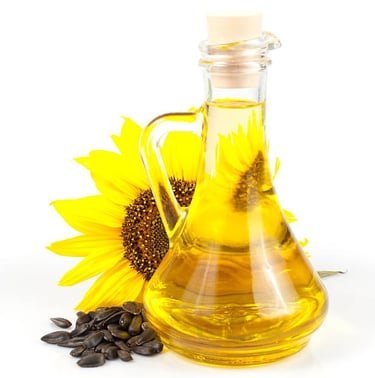
Crude sunflower oil is what comes out of the press before anyone touches it with heat, chemicals, or filtration beyond basic settling. It still carries the waxes, gums, free fatty acids, and pigments that give it that heavy amber color and a smell that actually reminds you of sunflower seeds, because nothing has been stripped out yet. That’s the whole point of buying it crude instead of refined. Buyers who want Crude Sunflower Oil for sale are almost always going to run it through their own refining process afterward, so they’d rather pay for oil in its natural state and control the downstream steps themselves than pay someone else to refine it first. It is a raw material, not a finished consumer good, and we sell it as exactly that.
Specifications
- Type: unrefined, mechanically pressed sunflower oil, straight from the seed
- Free fatty acid (FFA): 2.0% max
- Moisture and impurities: 0.5% max
- Color: deep amber to dark gold, unfiltered
- Aroma: pronounced natural sunflower seed aroma, not neutral
- Wax content: naturally present, removed later during refining
- Packaging: bulk only, flexitank (20-24MT), ISO tank, or 200L steel drums
- Shelf life: 6 months from production in cool, dark storage
- Origin: pressed in Thailand from fresh seed lots, traceable by press run
A Short History Worth Knowing
Sunflower oil pressing as an industrial trade goes back to Russian and Ukrainian mills in the 1800s, where growers realized the seed yielded more usable oil than most of the crops already in rotation, and the crop spread from there into Eastern Europe and eventually into Asia and the rest of the world. Refining as a separate industrial step came later, once mills figured out how to strip color, odor, and free fatty acids out of crude oil using heat, alkali, and steam, which is a process well documented on the Wikipedia page on vegetable oil refining if you want the technical breakdown of degumming, neutralizing, bleaching, and deodorizing. What matters for a buyer today is that crude oil and refined oil have always been two separate products sold to two different kinds of customers, and that split is still exactly how the trade works now.
Who Actually Buys Crude Sunflower Oil
This is not a product for a supermarket shelf, and we tell every new buyer that up front. The people who order Crude Sunflower Oil for sale from us are refineries that want raw feedstock they can process under their own specs, biodiesel producers who need a cheap triglyceride source with predictable FFA content, and soap and oleochemical makers who saponify the oil directly without caring much about color or smell. Some buyers are traders themselves, buying crude to blend or resell into refining operations elsewhere. What all of them have in common is that they are set up to handle an unrefined product, they have their own equipment or downstream partners for degumming and bleaching, and they are buying crude because it costs less per ton than anything already refined. If your operation needs a bottled, neutral-tasting oil ready to pour on a salad, this isn’t your product, and we’ll say so plainly rather than sell you the wrong grade.
Our Crude Sunflower Oil for Sale
Every batch of Crude Sunflower Oil for sale through DThai comes from seed pressed at facilities we work with directly in Thailand, and we track it by press run so a buyer can trace a shipment back to when and where it was made. We load flexitanks and ISO tanks for full container quantities, and we can pack 200L steel drums for buyers who want smaller lots or don’t have flexitank handling at the destination port. Minimum order volumes depend on packaging format, and we’re upfront about lead times rather than quoting something that sounds fast and then missing it. Nothing in this listing is a sample-size product, and we don’t do retail packaging of any kind. This is a wholesale line, priced and sold by the ton.
How Crude Sunflower Oil Is Pressed
The process starts with cleaning the seed to pull out shell fragments, dust, and foreign material, then cracking and conditioning it with mild heat to loosen the oil cells before mechanical pressing. A screw press squeezes the oil out under pressure, and what comes off the press still has fine solids in it, so it gets run through settling tanks and basic filtration to pull out the coarse particulate before it’s ready for storage or export. No solvent extraction, no bleaching earth, no deodorization happens at this stage, which is exactly why the oil still looks and smells like the seed it came from. Some mills run a second cold press on the cake to squeeze out a bit more oil, though yields drop off fast after the first pass. It’s a mechanical process from start to finish, and that’s reflected in the oil you get.
Uses and Applications
Once it leaves our hands, crude sunflower oil goes in a handful of directions depending on the buyer. Refineries take it through neutralizing, bleaching, and deodorizing to produce cooking-grade oil for retail or foodservice. Biodiesel plants transesterify it into fatty acid methyl esters, and crude oil works fine for that because the fuel-grade end product doesn’t care about the color or aroma issues that would matter to a food buyer. Soap manufacturers saponify it directly, sometimes blending it with other fats, since crude oil’s natural fatty acid profile works well in cold and hot process soapmaking. There’s also a smaller market for crude oil in animal feed formulations and industrial lubricant blending, where the unrefined characteristics aren’t a problem. Whatever the end use, buyers looking at Crude Sunflower Oil for sale are almost never the last stop in the supply chain, they’re a step in the middle of it.
Storage and Handling
Crude sunflower oil needs to be kept cool and out of direct light, because heat and UV exposure speed up oxidation and push FFA levels up faster than they would in stable storage. We recommend storage temperatures under 25°C where possible, and tanks or drums should be sealed to limit air exposure, since oxygen contact is the main driver of rancidity in an oil that hasn’t been stabilized through refining. Flexitanks and ISO tanks handle ocean transit well as long as they’re loaded correctly and not exposed to extreme heat on the dock before loading. Once it reaches the buyer, the six month shelf life assumes proper storage conditions, not a warehouse sitting in direct sun. Buyers running their own refining operations should plan to process incoming crude oil within that window rather than treating it as a long-term stock item.
A Note on Why It Costs Less Than Refined Grades
Crude oil is priced below refined oil for a simple reason, it’s an earlier-stage product and someone downstream still has to pay for the refining step. When you buy Crude Sunflower Oil for sale instead of refined, you’re skipping the cost of degumming, neutralizing, bleaching, and deodorizing, along with the yield loss that happens during those steps, since refining always removes some volume of material along with the impurities. That’s a real cost saving if you have refining capacity of your own or a relationship with a toll refiner, but it also means the price you see for crude isn’t directly comparable to a refined oil quote without adjusting for what refining would add. We quote crude on its own terms, and we’re happy to walk a buyer through what the economics look like if they’re weighing crude against refined for the first time.
Quality Control Before Every Shipment
Every lot gets tested before it leaves our facility, and we don’t ship anything we haven’t checked ourselves. FFA, moisture, and impurity levels get pulled and logged against the specs on this page, and we keep those records tied to the press run so we can answer questions about a specific shipment months later if a buyer needs it. We’re not interested in sending out a lot that tests outside spec and hoping nobody checks, because that’s how you lose a buyer permanently instead of just losing one shipment. If a buyer wants third-party inspection through SGS, Bureau Veritas, or another agency of their choosing, we accommodate that as standard practice, and we’d rather have an independent set of eyes on it than have a dispute later over numbers nobody can verify.
Comparing Crude Oil to Our Refined Grades
Crude is the starting point, and from there we also offer Refined Sunflower Oil for sale for buyers who want the color, odor, and FFA already brought down to food-grade spec without doing that work themselves, and Deodorized Sunflower Oil for sale for buyers who need the last stage of processing done too, where smell and taste are stripped almost completely. If you’re not sure which grade fits your operation, our general Sunflower Oil for sale page breaks down all three so you can compare specs side by side before deciding. The right choice mostly comes down to what equipment you already have and whether refining crude yourself is cheaper than buying it already refined, and that answer is different for every buyer depending on scale and location.
Why Buyers Choose to Work With Us
We’ve been moving bulk vegetable oil out of Thailand long enough to know that the thing buyers actually worry about isn’t the spec sheet, it’s whether the oil that shows up matches what was quoted. We test before loading, we document everything, and we answer emails without making a buyer chase us for basic shipment updates. Some buyers come to us already knowing they want Crude Sunflower Oil for sale and just need a reliable source, others aren’t sure yet whether crude or one of our finished lines like Refined Sunflower Oil for sale fits their process better, and we’re fine walking through that decision rather than pushing whichever product has better margin for us. Repeat buyers are worth more to us than one-off sales, so we run the business that way.
Frequently Asked Questions
Is crude sunflower oil the same as cooking oil you’d buy in a store?
No, crude oil is unrefined and not intended for direct food use, it needs to go through refining before it’s suitable as retail cooking oil.
What’s the minimum order quantity?
It depends on packaging format, flexitank and ISO tank loads are full container volumes, while drum orders can be smaller, contact us with your target volume and we’ll confirm what’s workable.
How long does an order take from confirmation to shipment?
Typically a few weeks depending on press schedules and current stock, we give a realistic timeline at quote stage rather than a number that sounds good and slips later.
Can you provide a certificate of analysis with each shipment?
Yes, every lot ships with a CoA covering FFA, moisture, and impurity levels, and we support third-party inspection if a buyer wants independent verification.
Do you sell smaller quantities for testing before a full order?
In some cases yes, drum quantities can work as an initial trial before committing to a full flexitank or ISO tank order, ask us directly about sample availability.
What packaging options are available for Crude Sunflower Oil for sale?
Flexitanks in 20-24MT capacity, ISO tanks, and 200L steel drums, the right option depends on your destination port infrastructure and order size.
Why Thailand for Sunflower Oil Sourcing
Thailand isn’t the first place people think of for sunflower oil, and that’s fair, it’s not a traditional sunflower-growing region the way parts of Europe or Central Asia are. What Thailand offers instead is strong port infrastructure, established export logistics, and a processing base that’s been built up around palm and other vegetable oils that translates well to handling sunflower oil too. We work with seed sourced through established supply chains and press it locally, which keeps our Crude Sunflower Oil for sale competitively priced against oil shipped out of more traditional origins once you account for freight routes and port efficiency. Buyers dealing with us also get a shipping position that works well for both eastbound and westbound trade lanes, which matters more than people expect once you’re comparing total landed cost rather than just the ex-works price.
Quality Control, Step by Step
Testing starts at the raw seed stage, checking for moisture content and contamination before it ever goes into the press. After pressing, we pull samples for FFA and moisture testing, and any lot that comes back outside our internal tolerance gets held back rather than blended into a shipment to bring numbers down. Before loading, we retest the specific tank or drum batch going out, not just a general facility average, because buyers are paying for what’s actually in their container, not a plant-wide estimate. Documentation from every stage gets filed against the press run number, so if a question comes up on a shipment weeks or months later, we can pull the actual test data instead of guessing. It’s not a complicated system, it’s just one we actually follow instead of treating as paperwork for show.
Common Mistakes Buyers Make When Sourcing Crude Sunflower Oil
The biggest mistake we see is buyers comparing a crude oil quote against a refined oil quote as if they’re the same product, and then being confused when the crude number looks too good to be true or the refined number looks expensive. They’re not interchangeable, and a fair comparison has to account for what refining costs on top of the crude price. Another common one is underestimating shipping and storage requirements, ordering Crude Sunflower Oil for sale without a plan for temperature-controlled storage on arrival, and then dealing with a faster-than-expected rise in FFA. We also see buyers skip asking for a CoA or inspection report because they assume it’s automatic, when it’s something worth confirming explicitly at quote stage so there’s no ambiguity about what documentation ships with the order. None of these mistakes are complicated to avoid, they just require asking the right questions before the order is placed, not after.
Order Process From Quote to Delivery
A buyer sends us their target volume, packaging preference, and destination port, and we come back with a quote that includes current pricing, lead time, and Incoterms options. Once terms are agreed and a contract is signed, we schedule the press run or pull from available stock depending on timing, and we keep the buyer updated as loading approaches rather than going quiet until the container is already on a vessel. Payment terms are worked out case by case, and we’re reasonable with new buyers who want some structure in place, like a letter of credit or staged payment, while they’re still building trust with us. Once the shipment loads, we send full documentation, and we stay reachable through transit in case questions come up before the container clears at destination.
A Note on Pricing
Crude sunflower oil pricing moves with the broader vegetable oil market, and sunflower oil specifically tracks seed crop conditions out of major growing regions along with general edible oil demand. We quote current pricing at the time of inquiry rather than publishing a static number, because a stale price on a page doesn’t help anyone and just leads to confusion at contract time. Buyers asking about Crude Sunflower Oil for sale should expect pricing to move week to week, sometimes more during periods of crop uncertainty, and we’ll always give a straight answer about where the market sits rather than quoting something artificially low to get a deal started and then walking it back later.
Working With a Trading Partner, Not Just a Supplier
We’ve turned down orders before because the buyer’s specs or timeline didn’t match what we could actually deliver, and we’d rather say that upfront than take the order and disappoint someone later. A supplier fills an order, a trading partner tells you when something doesn’t add up, flags a market shift before it costs you money, and sticks around for the next order instead of disappearing after one transaction. That’s how we try to run this, and it’s part of why a lot of our volume comes from repeat buyers rather than one-time inquiries. If you’re building a long-term supply chain around vegetable oil, that kind of relationship matters more than shaving a few dollars off one shipment.
Documentation We Provide
Standard documentation includes a commercial invoice, packing list, bill of lading, certificate of origin, and certificate of analysis covering the specs listed earlier on this page. We can also provide phytosanitary certificates, fumigation certificates for certain packaging types, and any additional paperwork required by the buyer’s customs authority, as long as we know the requirement ahead of loading. If a buyer’s bank requires specific documentation formatting for a letter of credit, we work through that during the quote stage so there are no surprises once the shipment is ready to go. We keep digital copies of everything tied to each shipment, so reissuing or clarifying a document later is a quick request, not a scramble.
Freight, Customs, and Realistic Lead Times
Ocean freight from Thailand covers most major ports worldwide, and transit times vary a lot depending on destination, typically ranging from a couple weeks for closer regional ports to over a month for longer routes. We quote Incoterms including FOB, CFR, and CIF depending on what a buyer’s logistics setup can handle, and we’re straightforward about which option makes sense for a given destination rather than pushing whichever term is easiest for us. Customs clearance on the buyer’s end is usually the part that adds unpredictability to a timeline, since import requirements for bulk vegetable oil vary by country and sometimes change without much notice. We give realistic lead time ranges at quote stage and flag anything that could push a shipment later, because a buyer planning production around a delivery date needs an honest number, not an optimistic one.
Getting a Quote
If you’re ready to move forward, send us your target volume, preferred packaging, and destination port, and we’ll turn around a quote with current pricing and lead time. We answer inquiries directly, no account minimums or gatekeeping before you can get a real number for Crude Sunflower Oil for sale. Whether this is your first bulk vegetable oil purchase or you’ve been importing for years, we’ll give you a straight quote and a realistic timeline, and we’ll tell you honestly if crude isn’t the right grade for what you’re trying to do.


Reviews
There are no reviews yet.