Description
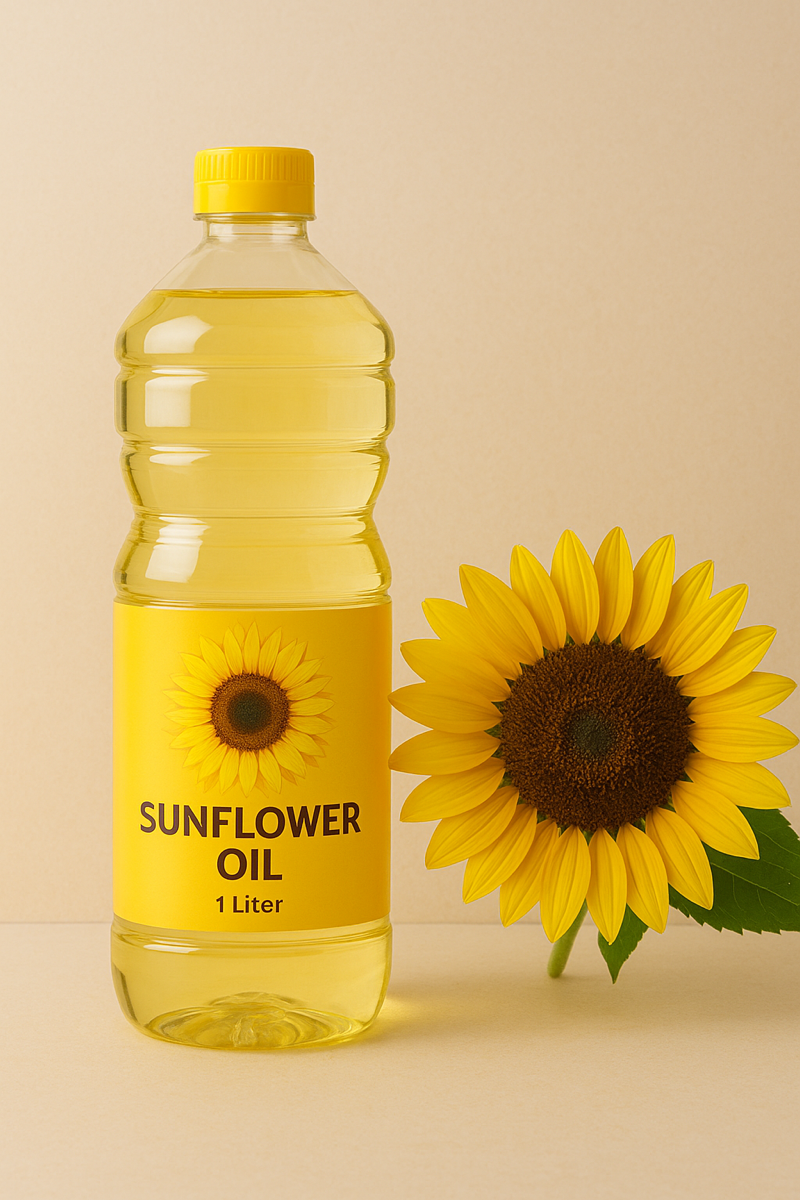
Sunflower oil moves in bulk out of ports around the world every single day, and if you’re on this page you’re probably trying to work out where to buy it, what it should cost, and whether the supplier on the other end will actually ship what they promised. We sell Sunflower Oil for sale in bulk and packaged formats to buyers across the globe, from small importers filling a few pallets to trading houses booking full flexitanks. This page covers our whole sunflower oil range – crude, refined, deodorized, high oleic, and organic – so you can work out which grade actually fits before you pick up the phone.
What Sunflower Oil Actually Is
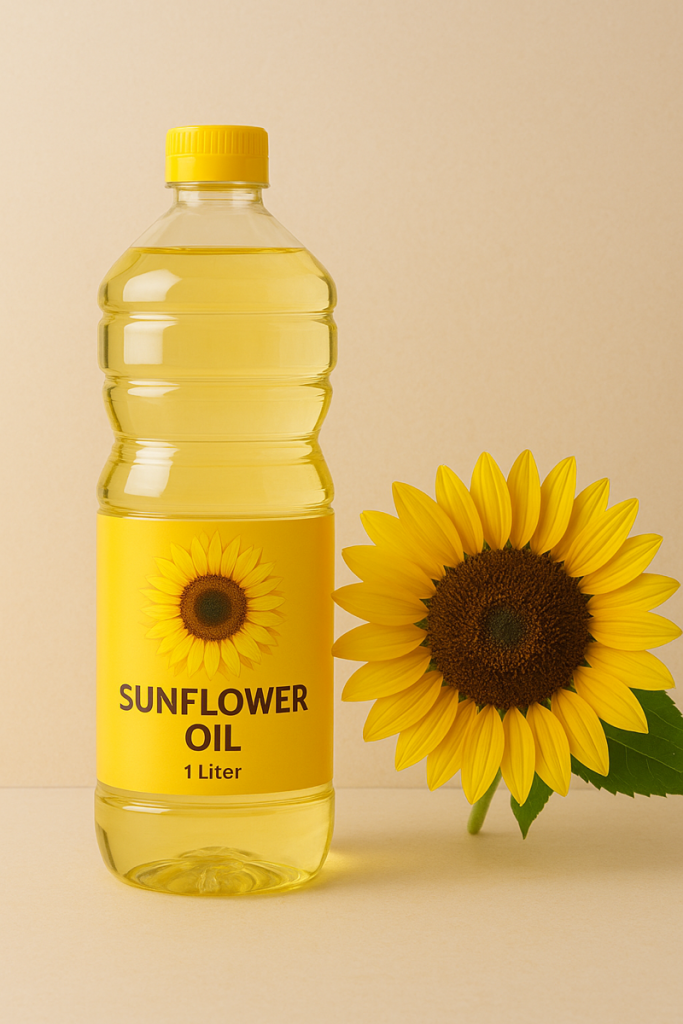
Sunflower oil is pressed from the seed of Helianthus annuus, the common sunflower, and it’s one of the most heavily traded vegetable oils in the world, right behind palm and soybean. It’s light in color, mild in flavor, and holds up reasonably well under heat, which is why it shows up in fryers, bottled cooking oil, margarine, and a long list of processed foods. The seed itself runs roughly 40-50% oil by weight depending on variety, and the rest becomes meal used in animal feed. What separates one shipment from another almost always comes down to processing and grade – crude oil straight off the press behaves nothing like a fully refined, bleached, and deodorized oil ready for the bottle. That distinction is the first thing we walk buyers through before they order Sunflower Oil for sale from us.
Specifications
- Type: refined, bleached, deodorized (RBD) sunflower oil, our standard all-purpose grade
- Free fatty acid (FFA): 0.1% max
- Moisture and impurities: 0.1% max
- Color (Lovibond 5.25 inch cell): 2.0-3.0 Red max
- Peroxide value: 2.0 meq O2/kg max
- Smoke point: approximately 230C
- Packaging: 1L, 2L and 5L bottles, 20L jerry cans, 200L steel drums, flexitank or ISO tank for bulk
- Shelf life: 12 months from production date in sealed, cool, dark storage
- Origin: processed in Thailand
A Short History Worth Knowing
Sunflowers aren’t native to Thailand or anywhere near it – they came from the Americas, domesticated by Indigenous peoples in what’s now the central United States long before Europeans ever saw one. Spanish explorers carried seeds back to Europe in the 1500s, though for a couple hundred years the plant stayed mostly a garden curiosity. Russia is where things actually changed – Russian farmers and processors worked out how to press oil from the seed at scale in the 1800s, and that’s really where sunflower oil became a commodity. For the fuller version there’s a solid Wikipedia page on sunflower oil covering the botany and trade history in more depth than we need here. What matters for a buyer today is that the crop spread from Russia and Ukraine through Eastern Europe and Argentina, and eventually into parts of Asia including Thailand, where we process seed and finished oil for export.
The Different Grades We Supply, and How to Pick One
We supply five grades, and it’s worth being straight about what each is for rather than just listing them. Crude sunflower oil is unrefined straight from pressing – dark, strong-smelling, full of free fatty acids – and it’s what refineries and some industrial buyers want because they’ll process it further themselves. Refined sunflower oil has been degummed, neutralized, bleached, and winterized, so it’s clear and stable and ready for retail or food service use. Deodorized oil is refined oil taken one step further through steam deodorization to strip out any remaining odor or flavor, which is what most bottled cooking oil actually is. High oleic sunflower oil comes from a seed variety bred for a higher share of monounsaturated fat, giving it a longer shelf life and higher smoke point, popular with snack and fryer-heavy operations. Organic sunflower oil is grown and processed under certification that restricts synthetic inputs, and it commands a premium for buyers who need that paperwork for their own retail claims. Unless you have a specific processing requirement, standard RBD oil covers most use cases and it’s the most cost-effective Sunflower Oil for sale we offer.
Our Sunflower Oil for Sale
Most people landing on this page want our standard grade, the refined, bleached, deodorized oil detailed above. It’s a workhorse – neutral flavor, long shelf life, consistent color batch to batch – and it’s what we move the most volume of. We run production year-round and hold enough finished stock to quote realistic lead times instead of the vague “4-6 weeks, maybe” you get from brokers who don’t actually control a factory. Buyers come back to us because we hit the same spec shipment after shipment, not just on the first order when everyone’s paying close attention. If your business needs something outside the standard grade, we’ll tell you that upfront.
How Sunflower Oil Is Made
Processing starts with cleaning the seed to remove stalks and debris, then dehulling to separate kernel from shell. The kernel goes through mechanical pressing, and solvent extraction pulls out most of what’s left in the pressed cake – together they get more oil out of the seed than pressing alone. What comes out at this stage is crude oil, and if that’s what a buyer wants, it stops there. For refined oil the crude goes through degumming, neutralizing with an alkali to strip free fatty acids, bleaching with clay to remove pigment, and a final deodorization step under vacuum and high heat. Each step costs real money, which is part of why refined oil trades at a premium over crude. Equipment matters too – older plants lose more oil to waste and turn out less consistent color.
Uses and Applications
Cooking oil is the obvious use – frying, sauteing, baking, dressings – but that’s the retail end of it. Food manufacturers use sunflower oil in margarine, mayonnaise, baked goods, and snack foods, where its neutral flavor doesn’t fight with other ingredients. Restaurants and food service buy it in bulk for fryers because it holds up to repeated heating better than a lot of alternatives, especially the high oleic grade. Outside food, it shows up in some cosmetics as an emollient and occasionally as biodiesel feedstock, though that’s a smaller slice of demand. Whatever the end use, buyers almost always need documentation proving the oil meets a specific spec before customs or their own quality department will sign off.
Storage and Handling
Sunflower oil is more sensitive to light and oxygen than people expect, and poor storage is the single biggest reason buyers end up with rancid or off-flavor product that isn’t actually the supplier’s fault. Keep it cool, keep it dark, keep containers sealed – direct sunlight and heat speed up oxidation and knock down shelf life fast. Drums and jerry cans handle this reasonably well since they block light, but bottled retail product needs to stay out of direct sun on the shelf. For bulk flexitank or ISO tank shipments, transit temperature matters more than most buyers think about – oil sitting in a hot container yard for weeks loses quality faster than the same oil stored properly. It’s worth remembering that Sunflower Oil for sale sitting in a hot warehouse for months is not the same product it was on the day it shipped, so plan your storage before the container arrives, not after.
A Note on Packaging and Order Sizes
We pack in 1L, 2L, and 5L bottles for retail-facing buyers, 20L jerry cans for food service and smaller accounts, 200L steel drums for buyers who want bulk without tank infrastructure, and flexitanks or ISO tanks for full container loads. Smaller bottled or jerry can orders work fine for buyers testing a new market, but the economics improve a lot once you’re ordering by the container. Most of what we move by volume ships in flexitanks and ISO tanks rather than smaller formats, and a 20-foot flexitank moves roughly 20,000-24,000 liters in a single shipment. We can mix packaging within a single order in some cases, though it adds handling cost, so raise it upfront rather than assume it’s automatic.
Quality Control Before Every Shipment
Every batch is tested before it leaves our facility – free fatty acid, moisture and impurities, peroxide value, and color, checked against the spec sheet for that order, not just a general house standard. We keep retained samples from every production run so if a question comes up after a shipment has landed, we can go back and check what actually left the plant. Third-party inspection is available and we’d rather you use it than take our word for it, especially on a first order – SGS, Bureau Veritas, Intertek, whoever your buyer’s compliance team trusts. That’s why every batch of Sunflower Oil for sale we ship carries a certificate of analysis as standard, not as a special request you have to ask for.
Comparing Our Sunflower Oil Grades
If you’re weighing which grade fits your order, here’s the short version. Refiners and repackagers buying in bulk to process further usually want Crude Sunflower Oil for sale since they’re refining it themselves and don’t want to pay for a step they’ll redo. Buyers who need finished, bottle-ready oil without a strong smell generally land on our Refined Sunflower Oil for sale, or step up to fully Deodorized Sunflower Oil for sale if their customers are sensitive to any residual flavor at all. Snack food and fryer-heavy operations tend to ask about high oleic once a batch of standard oil has broken down faster than they wanted under repeated heat. None of these grades are better in some absolute sense – they’re built for different jobs, and picking wrong costs you money on the wrong line.
Why Buyers Choose to Work With Us
Plenty of suppliers can quote you a price. Fewer can back it up with consistent specs, real inventory, and paperwork that matches what’s actually in the container when it arrives. If you need High Oleic Sunflower Oil for sale and we’re mid-cycle on that seed variety, we’ll give you the real timeline instead of promising something we can’t deliver. Same goes for Organic Sunflower Oil for sale – the certification chain has to be airtight or the whole premium falls apart, so we don’t cut corners on that paperwork even when it slows things down. A lot of our customers also buy other commodities from us – ICUMSA Sugar for sale is another line we ship worldwide, and consolidating orders across a couple of commodities with one supplier saves real money on freight. We’re not always the cheapest quote, but we’re usually the one still answering the phone a year later.
Frequently Asked Questions
What’s the minimum order quantity for Sunflower Oil for sale?
It depends on packaging – bottled and drummed orders can be smaller, while flexitank and ISO tank orders are priced for full container loads; we’ll give you a specific number once we know your packaging and destination.
Can you supply a certificate of analysis with every shipment?
Yes, every order ships with a certificate of analysis covering FFA, moisture, peroxide value, and color, and we support third-party inspection if your buyer requires it.
What’s the difference between refined and deodorized oil?
Refined oil has been degummed, neutralized, and bleached; deodorized oil goes through one more steam deodorization step to remove any remaining smell or taste, which is what most bottled retail oil actually is.
How long does sunflower oil last in storage?
About 12 months from the production date if it’s kept sealed, cool, and out of direct light; heat and sunlight are what shorten shelf life fastest.
Do you ship worldwide?
Yes, we export in bulk and packaged formats to buyers across every region, and we handle the export documentation needed to clear customs at the destination.
Can I order a mix of grades in one shipment?
In some cases yes, particularly on larger orders, though it depends on packaging format and adds handling complexity – raise it early so we can plan for it.
Why Thailand for Sunflower Oil Sourcing
Thailand isn’t a sunflower growing region in any serious way – the seed mostly comes in from other producing countries – but it’s become a strong processing and export hub thanks to port infrastructure, refining capacity built up over the past couple of decades, and a trade policy environment that makes exporting straightforward. Processing here means shorter, more predictable shipping lanes to a lot of destinations, and it puts us close to shipping lines running regular schedules rather than infrequent sailings. Labor and processing costs are competitive without cutting corners on the equipment a food-grade product needs, which is a big part of why we’ve built our Sunflower Oil for sale business around processing here rather than importing finished oil from elsewhere. It’s also a stable place to run a business long-term, which matters when a buyer is deciding whether to build a multi-year relationship or bounce between the cheapest quote every quarter.
Quality Control, Step by Step
Testing starts with the incoming seed or crude oil, checked before it enters our processing line, because a bad input stays a bad input no matter how good the refining is downstream. During refining we sample at each major stage – after degumming, neutralizing, bleaching, and deodorizing – so if something drifts off spec we catch it before it’s blended into a full batch. Finished product gets tested again against the full spec sheet before it’s approved for packing, and once packed we pull samples from the actual filled containers, not just the bulk tank. Retained samples stay in storage for a set period after shipment in case a buyer raises a concern later. It’s a repetitive process, and that’s the point – consistency comes from doing the same checks the same way every time.
Common Mistakes Buyers Make When Sourcing Sunflower Oil
The biggest one is chasing the lowest price per liter without checking whether the spec actually matches what’s needed – a cheap quote on crude oil doesn’t help if your process needs refined, and fixing that mismatch costs more than the quote saved. Second is skipping third-party inspection to save a few hundred dollars on a shipment worth tens of thousands, which is backwards math. Third is not asking about packaging costs upfront – some suppliers quote an attractive per-liter price then add packaging and handling charges that weren’t in the original number. Fourth is underestimating lead times around regional holidays or peak shipping seasons, when container availability tightens and freight prices move fast. And fifth, buyers sometimes assume all Sunflower Oil for sale on the market is basically interchangeable, when color, FFA, and peroxide value can vary enough between suppliers to matter for a sensitive application like frying or cosmetics.
Order Process From Quote to Delivery
It starts with you telling us what you need – grade, quantity, packaging, destination port – and we come back with a quote covering product price, packaging, and an estimate on freight. Once terms are agreed we usually work on a deposit against the balance paid before or against shipping documents, depending on order size and history together. Production or pulling from stock comes next, followed by testing, packing, and loading. We handle export documentation – commercial invoice, packing list, certificate of origin, certificate of analysis, bill of lading – and get it to you before the vessel sails so your customs broker has time to prepare. From confirmed order to vessel departure typically runs a few weeks, and ocean transit adds more time depending on your port.
A Note on Pricing
Sunflower oil pricing moves with the broader vegetable oil market, which tracks crude oil prices, weather in the major growing regions, and how the current crop is doing in whichever hemisphere is in season. The price you see quoted for Sunflower Oil for sale anywhere online is only ever a starting point until we know your exact packaging and destination. Bulk orders by flexitank or ISO tank get better per-liter pricing than drums, and drums beat bottles, because packaging and handling cost real money that has to go somewhere. We won’t lowball a quote to win an order and then try to renegotiate once you’re committed. If a competitor’s price looks too good relative to ours, it’s worth asking what spec they’re actually quoting against.
Working With a Trading Partner, Not Just a Supplier
There’s a difference between a company that’ll sell you one container and one that wants to still be your supplier three years from now, and it shows up in small ways – how fast someone answers a question, whether they flag a delay before you find out the hard way, whether they push back when you ask for something that won’t actually work for your application. We’ve turned down orders where a buyer wanted a spec that didn’t fit their stated use, because a customer burned by a bad recommendation doesn’t come back. Long-term relationships in this business get built on shipments that show up on time, matching spec, with paperwork that’s correct – not on whoever sends the most enthusiastic sales email.
Documentation We Provide
Every shipment comes with a commercial invoice, packing list, certificate of origin, certificate of analysis, and bill of lading as standard. Depending on destination we can also arrange phytosanitary certificates, health certificates, halal or kosher certification where applicable, and fumigation certificates for certain packaging. If your customs process needs something specific – a particular format, a consulate legalization – tell us early, since some paperwork takes lead time and can’t be rushed at the last minute. Documentation problems, not product problems, are what actually hold most shipments up at customs, so we treat this part of the process as seriously as the product itself.
Freight, Customs, and Realistic Lead Times
We can quote FOB, CIF, or CFR depending on your logistics setup, and we work with freight forwarders who handle vegetable oil regularly rather than general cargo forwarders unfamiliar with tank cleaning or flexitank handling. Realistic lead time from confirmed order to vessel departure is usually a few weeks, and ocean transit adds more on top depending on your destination port and whether it’s direct or requires transshipment. Customs clearance timing is mostly out of our hands once the vessel arrives, but complete, accurate documentation ready in advance is the single biggest thing that keeps clearance from dragging on. Peak shipping seasons can tighten container availability, so if you’re working against a hard deadline, build in some buffer.
Getting a Quote
If you’ve read this far, you probably know which grade you need, or at least you’ve got the questions narrowed down. Reach out with your target volume, packaging preference, and destination port, and we’ll turn around a quote that reflects current market pricing rather than a stale price list. Whether you need a single container or a recurring order for Sunflower Oil for sale on a monthly basis, we’ll walk you through specs, documentation, and realistic timelines before you commit. No pressure tactics, no artificial urgency – just straight answers so you can decide what fits your business.

Reviews
There are no reviews yet.