Description
DThai Company Limited ships Refined Sunflower Oil for sale to buyers across the food industry worldwide, from bottlers filling private label lines to foodservice distributors and industrial kitchens that go through drums by the pallet. This is the plain, everyday grade — refined, bleached, and deodorized, the stuff that ends up in a supermarket bottle or a restaurant fryer, not a niche product with a story attached to it. We supply it in bulk, backed by lab specs on every batch, and we load it out of Thailand onto vessels bound for ports on pretty much every continent. If you buy cooking oil for a living, this page has what you actually need to know before you request a quote.
What Refined Sunflower Oil Actually Is
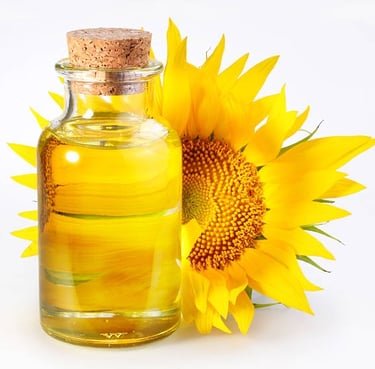
Refined sunflower oil starts as crude oil pressed or extracted from sunflower seeds, then goes through degumming, neutralizing, bleaching, and deodorizing before it is fit to sell as food-grade product — that is what the letters RBD stand for, and it is the industry shorthand you will see on every spec sheet in this trade. The refining strips out free fatty acids, waxes, pigments, and odor compounds that raw crude oil carries, leaving something light in color, neutral in smell, and stable enough to sit on a shelf or in a tank for months. When people search for Refined Sunflower Oil for sale, this is almost always what they mean, as opposed to crude oil that still needs processing or the boutique grades built for a specific claim on a label. It is the default choice because it works in the widest range of applications with the fewest complaints, and that is exactly why it moves in higher volume than any other sunflower oil grade we sell.
Specifications
- Type: refined, bleached, and deodorized (RBD) sunflower oil, the standard commodity grade
- Free fatty acid (FFA): 0.1% max
- Moisture and impurities: 0.1% max
- Color (Lovibond 5.25 inch cell): 2.0-3.0 Red max
- Peroxide value: 2.0 meq O2/kg max
- Smoke point: approximately 230C
- Packaging: 1L, 2L and 5L bottles, 20L jerry cans, 200L steel drums, flexitank or ISO tank for bulk
- Shelf life: 12 months from production date in sealed, cool storage
- Origin: processed in Thailand
A Short History Worth Knowing
Sunflowers are native to North America, but the oil trade as we know it was really built in Russia and Ukraine, where growers bred sunflower varieties specifically for oil content starting in the 1800s and turned it into a staple cooking fat across Eastern Europe long before it caught on elsewhere — you can read the fuller account on the Wikipedia page on sunflower oil if you want the details on cultivars and extraction methods over the decades. Southeast Asian processing capacity, including what we run here in Thailand, is a newer chapter, built up over the last few decades to serve export demand rather than a local seed crop, since Thailand does not grow much sunflower itself. What that means practically is that our refining runs on imported crude, processed to the same RBD standard buyers expect no matter where the seed came from. The history matters less to most buyers than the spec sheet, but it explains why this product looks and behaves the same whether it left a plant in Ukraine, Argentina, or here — refining is a standardized process, and that consistency is the whole point of buying a commodity grade in the first place.
Why Most Buyers Choose the Refined Grade
Ask anyone who has run a bottling line or a fryer program for a few years and they will tell you the refined grade wins because it is boring in the best sense — no strong smell, no dark color, no batch-to-batch surprises, and a smoke point high enough for frying without smoking out the kitchen. Crude oil needs further processing before it can touch food, so it is really an input for refiners rather than something a foodservice buyer or retail bottler wants to receive. High oleic and organic grades exist for a reason too, but they carry a price premium that most volume buyers cannot justify unless a customer is specifically paying for that claim. Refined Sunflower Oil for sale at commodity spec is the answer for maybe eighty percent of the buyers we talk to, because they are not selling a story, they are selling a product that has to perform the same way every time and hit a price point that keeps their own customers coming back.
Our Refined Sunflower Oil for Sale
We keep this grade in steady supply because it is our highest-volume line, and we quote it in whatever format a buyer’s operation actually needs — bottled retail packs for markets that want shelf-ready product, jerry cans and drums for smaller foodservice and industrial buyers, and flexitank or ISO tank loads for bottlers and manufacturers buying by the container. Every shipment ships with a certificate of analysis showing the actual test results for FFA, moisture, color, and peroxide value, not just the spec range we promise on paper. We work with first-time buyers placing a single container as readily as we work with buyers on standing monthly orders, and pricing scales with volume the way you would expect in any commodity trade. If your business runs on Refined Sunflower Oil for sale at real commercial volumes, we can usually get a working quote back to you within a day or two of getting your specs and destination port.
How Refined Sunflower Oil Is Made
The process starts with crude sunflower oil, which itself came from crushing or solvent-extracting the seed, and the first refining step is degumming, where phosphoric acid is used to pull out phospholipids that would otherwise cause the oil to foam and darken when heated. Next comes neutralizing, which uses a caustic wash to strip free fatty acids, followed by bleaching with activated clay that pulls out pigments and residual soap to get the oil down to that pale straw color buyers expect. The last step is deodorizing, done under vacuum at high temperature with steam injection, which removes volatile compounds responsible for smell and taste and pushes the peroxide value down to near zero right before packing. Each of those four steps is a real, measurable process stage, and a refiner cutting corners on any one of them shows up immediately in lab testing — which is exactly why we test finished product rather than just trusting the process sheet.
Uses and Applications
Retail bottlers buy Refined Sunflower Oil for sale to fill consumer bottles for supermarket shelves, since the neutral flavor and long shelf life make it a safe base for private label programs. Foodservice buyers run it in deep fryers because the smoke point holds up under repeated heating without breaking down as fast as some other vegetable oils, and it does not fight the flavor of whatever is being cooked. Food manufacturers use it as an ingredient oil in baked goods, sauces, and snack products where a neutral fat is needed. Some buyers blend it with other oils to hit a cost or performance target, which is easy to do with a refined oil precisely because it does not bring a strong character of its own.
Storage and Handling
Keep it out of direct sunlight and away from heat sources, because UV exposure and high ambient temperature accelerate oxidation, which shows up as rising peroxide value and eventually a rancid smell nobody wants to discover after the container has cleared customs. Drums and jerry cans should stay sealed until use and stored somewhere reasonably cool and dry — a covered warehouse is fine, you do not need refrigeration. Once a flexitank or ISO tank is discharged into your own storage tanks, keep those tanks clean and avoid mixing with older stock that may already be partially oxidized. Twelve months of shelf life assumes sealed packaging and reasonable storage; once a container is opened and exposed to air repeatedly, that clock starts running faster.
A Note on Pricing Versus Crude and Specialty Grades
Refined oil sits in the middle of the pricing ladder — more expensive than crude because of the processing cost, but noticeably cheaper than high oleic or certified organic sunflower oil, which carry premiums tied to specific seed varieties or certification programs rather than processing. Buyers sometimes ask why they should not just buy crude and refine it themselves, and for large integrated operations that can make sense, but for most buyers the capital cost of refining equipment and the compliance overhead of running it properly makes buying finished Refined Sunflower Oil for sale the cheaper option once you account for everything. Prices move with the broader vegetable oil complex — soybean oil, palm oil, and crude sunflower oil futures all pull on each other — so we quote current market pricing at the time of inquiry rather than publishing a fixed number that would be stale within a week.
Quality Control Before Every Shipment
Every batch of Refined Sunflower Oil for sale gets tested before it leaves the plant — free fatty acid content, moisture and impurities, color on the Lovibond scale, and peroxide value against the specs on this page — and we share those lab results with buyers before shipment on request. We also inspect packaging integrity before loading, since a shipment that looks fine on paper but arrives with a compromised drum seal is a problem nobody wants to deal with mid-ocean. If a buyer wants third-party inspection through SGS, Bureau Veritas, or a similar surveyor, we can accommodate that at the buyer’s cost. None of this is an upsell — it is baseline practice for anyone serious about exporting food-grade oil.
Comparing Refined Oil to Our Other Grades
If you are trying to figure out which grade fits your operation, the short version is this: Crude Sunflower Oil for sale is for buyers who have their own refining capacity and want to control that process themselves, usually at a lower entry price since they are buying an unfinished input. Deodorized oil, which you can see specced separately as Deodorized Sunflower Oil for sale, is close to refined but worth checking against your exact spec needs if odor and taste neutrality matter more to your application than anything else. And if you are still comparing grades generally before narrowing down, our main Sunflower Oil for sale page gives you the full lineup side by side. For most buyers running a bottling line, a fryer program, or general food manufacturing, though, refined is the grade that matches what they actually need without paying for capability they will not use.
Why Buyers Choose to Work With Us
We have been moving vegetable oil out of Thailand long enough to know that the thing buyers actually worry about is not the spec sheet — it is whether the container that shows up matches what got quoted. That is the whole reason we test every batch and share real lab data instead of asking buyers to take our word for it. We are just as comfortable quoting Refined Sunflower Oil for sale for a first container as we are handling a buyer who has been ordering from us for years, and we do not disappear after the deal closes if a question comes up on documentation or delivery. Buyers comparing us against other suppliers of Sunflower Oil for sale usually end up asking the same three questions — can you prove the specs, can you hit the packaging I need, and will you answer the phone after the invoice is paid — and we are set up to answer yes to all three.
Frequently Asked Questions
What is the difference between refined and crude sunflower oil?
Crude oil is the raw extract straight from the seed, still carrying free fatty acids, gums, and strong odor and color, while refined oil has gone through degumming, neutralizing, bleaching, and deodorizing to become a stable, neutral, food-ready product — crude needs further processing before it is fit for retail or foodservice use.
What is the minimum order quantity?
It depends on packaging format — bottled and jerry can orders can start smaller, while bulk formats like flexitank and ISO tank are generally quoted at full or near-full container loads; get in touch with your target volume and we will tell you what makes sense.
Can you supply private label bottling?
Yes, we regularly supply bulk refined oil to bottlers running their own label programs, and we can advise on packaging formats that work well for that.
How long does an order take from quote to delivery?
Production and loading typically run a few weeks depending on current order volume, and transit time on top of that depends entirely on your destination port — we give realistic timelines once we know where the oil is going.
Do you provide certificates of analysis and other export documents?
Yes, every shipment includes a certificate of analysis, and we provide the standard export documentation package including certificate of origin, packing list, and bill of lading.
Is this oil suitable for high-heat frying?
Yes, refined sunflower oil has a smoke point around 230C, which holds up well under repeated frying cycles in commercial foodservice use.
Why Thailand for Sunflower Oil Sourcing
Thailand has built a strong reputation as a food export hub over the past few decades, and that reputation rests on port infrastructure, established shipping lanes to just about everywhere, and a regulatory system that is used to processing food-grade exports at scale. We are not growing sunflower seed domestically here — the crude comes in from established growing regions — but the refining, testing, and export logistics all run through Thai facilities and Thai ports, which gives buyers a stable, well-documented supply chain rather than sourcing tied to a single unpredictable harvest. For a buyer sitting anywhere in the world evaluating suppliers, sourcing Refined Sunflower Oil for sale out of Thailand means dealing with an export ecosystem that has already solved most of the logistics problems that trip up newer trading hubs.
Quality Control, Step by Step
It starts before the oil reaches our facility, with incoming crude checked against agreed specs so we are not refining substandard material to begin with. During refining, in-process checks track color and FFA reduction at each stage rather than waiting until the end to find a problem. Once refining is complete, finished product testing covers the full spec panel against the numbers listed earlier on this page, and before loading we do a final check on packaging — drum seals, tank cleanliness, correct labeling — because a mistake caught on the dock costs less than one caught after the vessel has sailed.
Common Mistakes Buyers Make When Sourcing Refined Sunflower Oil
The biggest one is chasing the lowest quoted price without asking what is backing it up — a price well below market usually means someone is cutting a corner, whether that is on testing, packaging, or the honesty of the spec sheet. Another is not locking in packaging requirements early enough; switching from drums to flexitank after production has started causes delays that are avoidable with a five-minute conversation up front. Buyers also skip requesting sample documentation before committing, which is a mistake given how cheap it is to ask for a certificate of analysis from a recent batch first. Last one: underestimating shipping timelines to less common ports, then being surprised the oil takes longer than a container headed to a major hub would.
Order Process From Quote to Delivery
It starts with you sending us specs, packaging preference, quantity, and destination port, and we come back with a formal quote within a day or two. Once terms are agreed, we confirm production scheduling and a realistic loading timeline. After loading, we handle export documentation and coordinate with the freight forwarder, keeping you updated on vessel schedule. On arrival, you handle import clearance using the documentation package we provide, and we stay reachable if questions come up — this deal is not finished until the oil is in your hands and everything checks out.
A Note on Pricing
We quote based on current market conditions, current freight rates to your destination, and your specific packaging and volume, so tjolume, so there is no fixed published price list — anyone quoting a flat number without asking those questions first is guessing. Volume matters: a full container prices better per unit than a smaller mixed order, which is standard across this industry, not unique to us. We are upfront when market conditions mean pricing looks different from an older quote, because vegetable oil markets move, and pretending otherwise just sets up a bad conversation later.
Working With a Trading Partner, Not Just a Supplier
A lot of export relationships break down because the supplier disappears the moment the invoice is paid, and we have built our business specifically to not be that. Questions come up after delivery — a documentation detail a customs office wants clarified, a packaging tweak for a future order — and we treat those the same as the original sale conversation. Repeat buyers of Refined Sunflower Oil for sale get the benefit of an established relationship: we already know their packaging preferences, order size, and destination logistics, which cuts down the back-and-forth on every order after the first. That is the difference between a supplier you use once and a trading partner you keep coming back to.
Documentation We Provide
Standard documentation on every shipment includes a certificate of analysis, a certificate of origin, a commercial invoice, a packing list, and a bill of lading. Depending on destination, we can also arrange health certificates and fumigation certificates for certain packaging. If your customs authority has a specific requirement not listed here, tell us early in the quote process so we can confirm we can meet it.
Freight, Customs, and Realistic Lead Times
Ocean freight is the standard mode given the volumes involved, and transit time depends heavily on your destination port and current shipping line schedules, which we walk through once we know where the oil is headed. Import duties, taxes, and customs clearance are the buyer’s responsibility on the receiving end, and rules vary a lot by country, so check with your own customs broker before finalizing volumes. We build realistic production and loading timelines into every quote rather than promising a date we cannot hit, because a missed date costs a buyer more than a slightly longer honest one ever would. Container availability and port congestion can shift lead times on short notice, and we flag that early if it affects your order.
Getting a Quote
If you need Refined Sunflower Oil for sale in bulk, send us your target volume, preferred packaging, and destination port, and we will get a working quote back to you fast — most inquiries hear back within a day or two. We are used to working with buyers who are new to importing as well as established operations placing repeat orders, so do not worry about asking basic questions if this is your first time sourcing vegetable oil internationally. Reach out through the contact form on this site, and we will take it from there.

Reviews
There are no reviews yet.