
The HS code for jasmine rice starts with 1006, the heading for all rice. For normal white jasmine rice, the one most people import, the six-digit HS code for jasmine rice is 1006.30, which covers semi-milled and wholly milled rice. Brown jasmine, broken jasmine and paddy each sit under a different subheading, and many countries add their own extra digits on top. We’re DThai Company Limited, a Thai rice exporter, and we put the right codes on every invoice and certificate we send. This guide explains the codes, the national lines that matter, and the specs of the jasmine rice we sell, so your shipment clears customs without arguments.
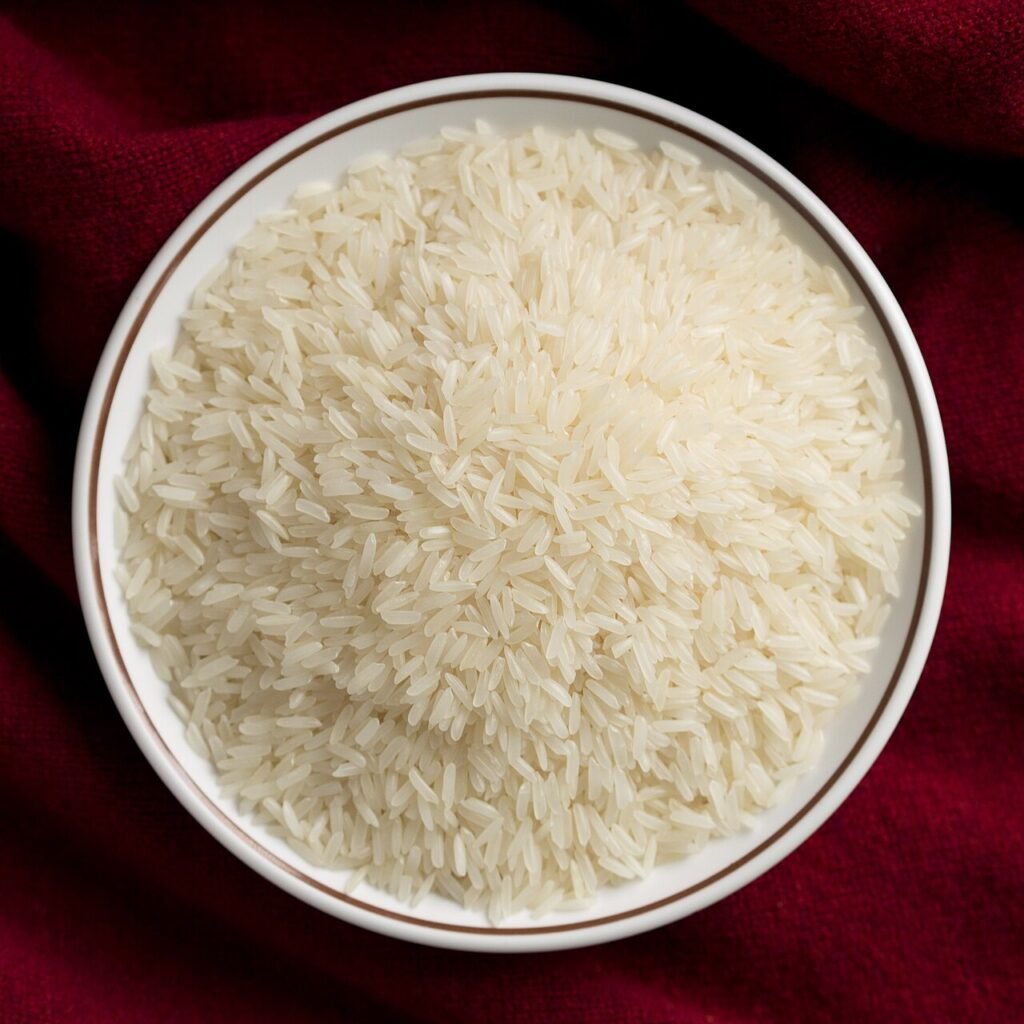
Table of Contents
The Short Answer: HS Code for Jasmine Rice
| Type of jasmine rice | HS code (6-digit) | What it covers |
|---|---|---|
| Jasmine paddy (rough rice) | 1006.10 | Rice still in the husk |
| Brown jasmine rice | 1006.20 | Husked rice, bran layer still on |
| White jasmine rice | 1006.30 | Semi-milled or wholly milled, polished or not |
| Broken jasmine rice | 1006.40 | Broken kernels sold separately |
If you’re importing white Thai Hom Mali or jasmine rice in 25kg or 50kg bags, the HS code for jasmine rice you’ll use is almost always 1006.30. That’s the starting point. The extra digits depend on the country you’re importing into.
How the HS System Works
The Harmonized System is the shared product coding system run by the World Customs Organization. More than 200 countries use it. The first six digits are the same everywhere. After that, each country or trade bloc adds its own digits for duty rates and trade statistics.
- First 2 digits (10): the chapter, cereals.
- First 4 digits (1006): the heading, rice.
- First 6 digits (1006.30): the subheading, milled rice. This part is international.
- 8 to 10 digits: national lines, which vary by country.
So the six-digit HS code for jasmine rice is the same in Bangkok, Dubai, Lagos, Rotterdam and Los Angeles. The full code on your import entry will be longer, and it’s that longer code that sets your duty.
The Four Rice Subheadings in Detail
1006.10: Rice in the husk
Paddy or rough rice, straight from the field. It’s mostly traded for seed or for milling in the importing country. Very few buyers import jasmine paddy, and Thailand controls paddy exports closely.
1006.20: Husked (brown) rice
The husk is removed but the bran stays on. Brown jasmine rice and brown Hom Mali go here. If you sell to health food stores, this is the HS code for jasmine rice in its brown form. See our brown rice for sale page for specs.
1006.30: Semi-milled or wholly milled rice
This is the big one. White jasmine, white Hom Mali, Thai fragrant rice, long grain white, glutinous and parboiled rice all fall under 1006.30, whether polished or glazed or not. If someone asks you for the HS code for jasmine rice without saying which kind, they almost always mean this one.
1006.40: Broken rice
Broken kernels sold on their own, such as A1 Super broken jasmine. It’s popular in West Africa and for rice flour and noodles. Broken rice that’s mixed into a normal 5% broken white rice lot doesn’t move to 1006.40. The lot stays under 1006.30.
Thailand’s Export Codes for Jasmine Rice
Thailand uses the ASEAN Harmonised Tariff Nomenclature (AHTN), which gives Hom Mali its own eight-digit lines. That’s unusual. Few countries name a single rice variety in their tariff.
| AHTN code | Description |
|---|---|
| 1006.10.10 | Rice in the husk, suitable for sowing |
| 1006.10.90 | Rice in the husk, other |
| 1006.20.10 | Husked (brown) rice, Hom Mali |
| 1006.20.90 | Husked (brown) rice, other |
| 1006.30.30 | Milled rice, glutinous |
| 1006.30.40 | Milled rice, Hom Mali |
| 1006.30.91 | Milled rice, parboiled |
| 1006.30.99 | Milled rice, other |
| 1006.40.10 | Broken rice, for animal feed |
| 1006.40.90 | Broken rice, other |
So for white Thai Hom Mali, the export HS code for jasmine rice on our paperwork is 1006.30.40. For Thai fragrant rice that isn’t certified Hom Mali, it’s usually 1006.30.99. Because other ASEAN members use the same AHTN structure, importers in Malaysia, Singapore, the Philippines and other ASEAN countries see the same Hom Mali line on their side.
Thai Hom Mali also has to meet the national standard to be exported under that name. We explain it in our post on TAS 4000 Hom Mali rice.
US Import Codes for Jasmine Rice
The United States has separate statistical lines for jasmine. On the US Harmonized Tariff Schedule, the 10-digit codes are:
- 1006.30.90.57: milled jasmine rice (white)
- 1006.20.40.25: husked (brown) jasmine rice
Parboiled rice has its own line under 1006.30.10, and basmati has its own lines too. US duty rules have changed a lot in the last two years, with extra tariffs on top of the normal rate for some countries, so check the current rate with your customs broker before you price. The HS code for jasmine rice itself hasn’t changed, but the total duty on it may have.
EU and UK Codes
The EU’s Combined Nomenclature splits milled rice by grain shape rather than by variety. It looks at the length of the grain and its length-to-width ratio. Jasmine rice is a long, slender grain, so it usually lands in the long grain lines with a ratio of 3 or more. For wholly milled jasmine that’s typically 1006 30 98.
The UK uses a very similar structure. Because the EU and UK codes depend on grain measurements, your importer may ask for the average length and ratio from the inspection certificate. We include those figures on request.
Other Markets
China, the Middle East, Africa and Latin America all start from the same 1006.30 subheading and add their own digits. Some countries have special lines for fragrant rice or for rice under a quota. Others don’t separate jasmine at all and just use a general milled rice line.
The safe approach is always the same. Give your customs broker the six-digit HS code for jasmine rice, a clear product description and the spec sheet, and let them confirm the full national code. Brokers deal with their own tariff every day. A supplier on the other side of the world can only point you in the right direction.
Quick Reference: HS Code for Jasmine Rice by Market
Here’s a cheat sheet you can keep next to your import file. Always confirm the final digits with your broker, because national codes get revised.
| Market | White jasmine rice | Brown jasmine rice | Notes |
|---|---|---|---|
| International (6-digit) | 1006.30 | 1006.20 | Same in every HS country |
| Thailand and ASEAN (AHTN) | 1006.30.40 (Hom Mali), 1006.30.99 (other fragrant) | 1006.20.10 (Hom Mali) | Hom Mali has its own line |
| United States (HTS) | 1006.30.90.57 | 1006.20.40.25 | Separate jasmine lines; check current duty |
| European Union (CN) | Usually 1006 30 98 | Long grain line under 1006 20 | Based on grain length and ratio |
| Other markets | 1006.30 plus national digits | 1006.20 plus national digits | Confirm with your broker |
If your market isn’t listed, start with the six-digit HS code for jasmine rice and work out from there. The structure is always the same.
HS Updates and Why Old Codes Cause Problems
The WCO updates the Harmonized System roughly every five years. The six-digit HS code for jasmine rice has stayed stable for a long time, but countries often reshuffle their own eight and ten-digit lines when an update comes in. A code that worked on your shipment five years ago might not exist today.
It’s worth checking your codes once a year, and every time your country announces tariff changes. We keep our own export codes current, and we’ll tell you if anything changes on the Thai side that affects the HS code for jasmine rice on your documents.
Why the Right Code Matters
Getting the HS code for jasmine rice wrong is not just a paperwork slip. It can cost real money:
- Wrong duty. Pay too little and you face back duty and fines later. Pay too much and you lose margin you’ll never get back.
- Delays. If the code on the invoice doesn’t match the certificate of origin, customs may hold the container until it’s fixed. Port storage charges add up fast.
- Lost trade benefits. Free trade agreement rates only apply if the code, origin rules and documents all line up.
- Quota trouble. In countries with rice quotas or import permits, the permit is issued for a specific code. Ship under a different one and the permit may not cover it.
- Bank rejection. Under a letter of credit, a code mismatch between documents can be enough for the bank to refuse payment.
Documents Where the Code Appears
The HS code for jasmine rice shows up on several documents in each shipment. They all need to match:
- Commercial invoice
- Packing list
- Certificate of origin (Form D for ASEAN, Form E for China, and others under trade deals)
- Export declaration in Thailand
- Phytosanitary certificate (product description)
- Your import declaration
- Import permit or license, where your country requires one
We check that every document we issue uses the same HS code for jasmine rice and the same description. For the full list and what each one does, read bulk rice import documentation.
Our Jasmine Rice Specifications
Knowing the HS code for jasmine rice is one thing. Knowing what’s in the bag is another. Here’s what we ship:
| Parameter | Thai Hom Mali 100% | Thai jasmine / fragrant rice |
|---|---|---|
| HS code (Thai export) | 1006.30.40 | 1006.30.99 |
| Hom Mali purity | 92% min | As agreed |
| Broken (max) | 4 to 5% | 5% |
| Moisture (max) | 14% | 14% |
| Average grain length | 7.0mm min | 6.8 to 7.0mm |
| Chalky kernels (max) | 6% | 6% |
| Damaged kernels (max) | 0.25% | 0.25% |
| Yellow kernels (max) | 0.2% | 0.2% |
| Foreign matter (max) | 0.1% | 0.1% |
| Crop | Latest crop, milled to order | |
| Packing | 1kg, 2kg, 5kg, 10kg retail; 25kg and 50kg PP bags; private label | |
| Load per 20ft | About 25 MT in 25kg or 50kg bags | |
| Loading ports | Bangkok or Laem Chabang | |
See full product details on our Thai Hom Mali rice for sale, jasmine rice for sale and Thai fragrant rice for sale pages.
Codes for the Other Rice We Sell
Many buyers mix grades in one container. Each grade on the invoice needs its own line and its own code:
- Thai glutinous rice: 1006.30 (AHTN 1006.30.30)
- Parboiled rice: 1006.30 (AHTN 1006.30.91)
- Thai white rice and long-grain white rice: 1006.30 (AHTN 1006.30.99)
- Brown rice: 1006.20
- Red rice and black rice: 1006.20 if unpolished, 1006.30 if milled
Common Mistakes With Rice HS Codes
- Using 1006.40 for normal white rice with some broken. A 5% broken lot is still milled rice under 1006.30.
- Using the brown rice code for white rice, or the reverse. Check the milling degree.
- Using “jasmine” on the invoice but “long grain white rice” on the certificate of origin. Descriptions must match across documents.
- Copying the code from an old shipment. National lines change every few years when the HS is updated. The last big update was in 2022, and another is due in 2027.
- Leaving it to the supplier. Your broker should confirm the import code. We’ll give you the six-digit HS code for jasmine rice and our export code, but your import code is your country’s call.
Trade Agreements and Duty Savings
Thailand has free trade agreements with ASEAN members, China, Japan, Korea, India, Australia, New Zealand, Peru, Chile and others. If your country is part of one, you may pay lower duty or none at all on Thai rice, as long as the HS code for jasmine rice and the certificate of origin line up.
Rice is a sensitive product, though. Many countries keep rice out of their tariff cuts or protect it with quotas. Ask your broker which agreement applies and which certificate you need. We’ll issue the right form of certificate of origin at our end.
Does Packing Change the HS Code for Jasmine Rice?
No. The HS code for jasmine rice is the same whether it ships in 1kg retail bags, 50kg sacks or a bulk liner. Customs classifies the product, not the packaging. A container of 1kg vacuum packs of white Hom Mali and a container of 50kg bags of the same rice both sit under 1006.30.
What does change the code is processing. Once rice is cooked, flavored or turned into something else, it leaves heading 1006 altogether:
- Pre-cooked or instant rice generally moves to heading 1904.
- Rice flour goes under heading 1102.
- Rice noodles and vermicelli go under heading 1902.
- Rice mixed with seasoning sachets can move to other chapters depending on the mix.
If you sell any of these, don’t reuse the HS code for jasmine rice from your plain rice shipments. Ask your broker to classify each product on its own.
Writing the Product Description
The code and the description travel together. A good description makes the HS code for jasmine rice obvious to a customs officer at a glance. A vague one invites questions.
Here’s the kind of wording we use on our invoices:
- “Thai Hom Mali Rice 100% Grade A, wholly milled, crop 2025/2026, packed in 25kg PP bags”
- “Thai Fragrant (Jasmine) Rice 5% broken, wholly milled, packed in 50kg PP bags”
- “Thai Brown Hom Mali Rice, husked, packed in 1kg vacuum bags”
Each one tells customs the variety, the milling degree and the packing. That’s usually enough to confirm the subheading without anyone opening a bag. Avoid descriptions like “rice, food grade” or “agricultural product.” They slow things down.
A Typical Mix-Up We See
Here’s a situation that comes up more often than you’d think. A buyer orders white jasmine rice. Their own system has an old template for brown rice, and the import declaration goes in under 1006.20 instead of 1006.30. Our invoice and certificate of origin say 1006.30. Customs spots the mismatch and holds the container while the declaration is corrected.
Nobody did anything dishonest, but the box sat at the port for days and storage fees ran up. The fix was easy. Avoiding it was easier. Before the ship arrives, compare the HS code for jasmine rice on your draft declaration with the one on our documents. If they don’t match, call us or your broker before the vessel docks.
Your Pre-Shipment Checklist
- Confirm the six-digit HS code for jasmine rice for your grade: 1006.30 for white, 1006.20 for brown, 1006.40 for broken.
- Get your broker to confirm the full national code and the current duty.
- Check whether you need an import permit or quota allocation for that code.
- Check which certificate of origin gives you the lowest duty.
- Send us the code and certificate type before we prepare documents.
- Review our draft documents and check the code and description on each one.
- Keep a copy of everything for your customs records.
Getting Jasmine Rice From Thailand: The Order Process
- Tell us the grade, pack size, volume and your destination port.
- We send a quote and a spec sheet showing the HS code for jasmine rice we’ll use on export documents.
- You confirm the import code with your broker and check whether you need a permit.
- We agree the contract, payment terms and inspection.
- We mill, pack, inspect and load, then send you the full document set.
Not sure which Incoterm to use? Read FOB vs CIF for rice import. For the steps in more detail, see how to import rice from Thailand. If you want to know how much fits in each container, read how many tons of rice in a 20ft container. If you’re comparing origins, our Thai jasmine rice vs Vietnamese jasmine rice guide covers the differences.
Why Import Your Jasmine Rice From DThai
- We show the HS code for jasmine rice and a clear product description on every draft document before shipping.
- We sell certified Thai Hom Mali under its own export line, not as generic rice.
- We mill to order and welcome independent inspection at loading.
- We issue the right certificate of origin for your trade agreement.
- We also sell sugar and sunflower oil, each with its own correctly coded paperwork.
For regular supply, our supply contracts keep the grade, codes and documents the same on every shipment. Routes and transit times are on our worldwide shipping page, and you can see every grade on our rice for sale page.
Frequently Asked Questions
What is the HS code for jasmine rice?
For white milled jasmine rice, it’s 1006.30. Brown jasmine is 1006.20, broken jasmine is 1006.40 and jasmine paddy is 1006.10.
What is the HS code for Thai Hom Mali rice?
Under the AHTN used in Thailand and ASEAN, milled Hom Mali is 1006.30.40 and brown Hom Mali is 1006.20.10.
What is the US HTS code for jasmine rice?
1006.30.90.57 for milled jasmine and 1006.20.40.25 for brown jasmine.
Is the HS code for jasmine rice the same in every country?
The first six digits are the same worldwide. The longer national code differs from country to country.
Does broken rice in a normal lot change the code?
No. A normal 5% broken white jasmine lot stays under 1006.30. Only rice sold as broken rice goes under 1006.40.
Do you put the HS code on your documents?
Yes. Every invoice, packing list and certificate of origin we issue shows the HS code and a matching description.
Do you ship jasmine rice worldwide?
Yes. We ship to Asia, the Middle East, Africa, Europe, the Americas and Oceania.
The HS code for jasmine rice is simple once you know the pattern: 1006 for rice, 1006.30 for white jasmine, plus your country’s own digits. The harder part is making sure every document matches and the rice in the bag matches the paperwork. That’s our job. Contact us with your grade, volume and port, and we’ll send a quote with the codes and specs spelled out.