
Rice packaging for export decides more than how your rice looks on a shelf. It decides how much fits in a container, how the rice survives three or four weeks at sea, how easy it is to unload, and whether customs and your customers trust what’s in the bag. Pick the wrong pack and you can lose money before the rice even reaches your warehouse. We’re DThai Company Limited, a rice exporter in Thailand, and we pack and ship Thai rice in every common export format for importers, wholesalers and private label brands worldwide. This guide covers the bag types, 25kg vs 50kg, retail packs, labelling and what we recommend for different buyers.
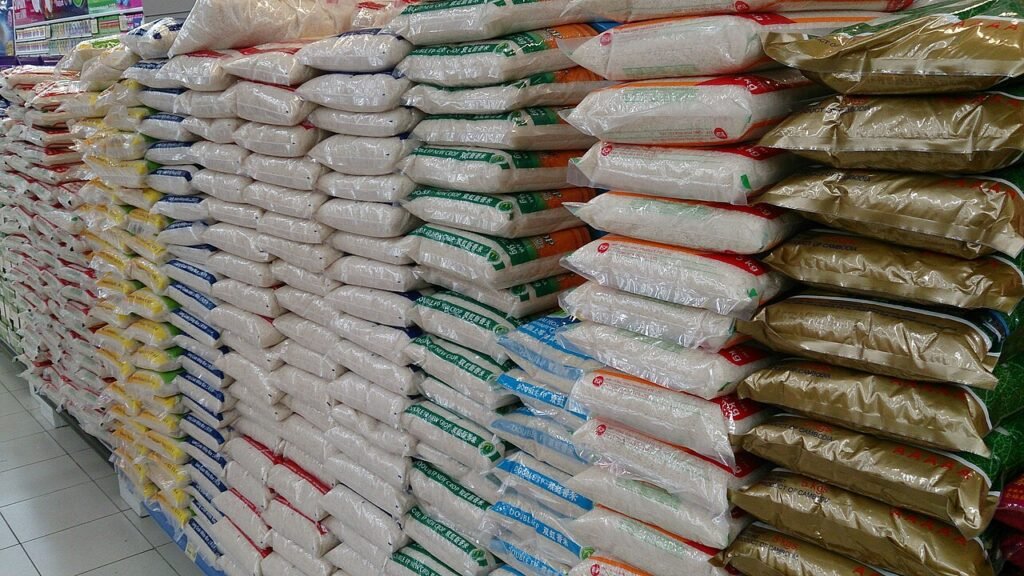
Table of Contents
Rice Packaging for Export: The Main Options
Most export rice ships in one of these formats:
| Pack type | Sizes | Best for | Load per 20ft |
|---|---|---|---|
| PP woven bags | 25kg, 50kg | Wholesale, food service, distributors | 25 MT |
| PP woven with PE liner | 25kg, 50kg | Jasmine and Hom Mali (keeps aroma) | 25 MT |
| BOPP laminated printed bags | 5kg, 10kg, 25kg | Branded and private label rice | 23 to 25 MT |
| Jute bags | 25kg, 50kg | Premium and traditional markets | About 24 to 25 MT |
| Retail PE or PA/PE bags | 1kg, 2kg, 5kg | Supermarkets | 20 to 24 MT |
| Vacuum packs in cartons | 1kg, 2kg, 5kg | Premium retail, long shelf life | 18 to 22 MT |
| Jumbo bags | 1,000kg | Mills and repackers | 20 MT |
All of these work. The right rice packaging for export depends on who buys from you and what they do with the rice next.
25kg vs 50kg Bags
This is the question we’re asked most about rice packaging for export. Both load 25 tons in a 20ft container, so the freight cost per ton is the same. The differences are about handling, price and what your customers want.
Why buyers choose 50kg bags
- Fewer bags to count, stack and move. 500 bags per container instead of 1,000.
- Slightly cheaper per ton, because you buy half as many bags.
- Traditional in many markets in Africa, the Middle East and South Asia, where wholesalers sell by the 50kg sack.
- Faster loading and unloading with experienced labor.
Why buyers choose 25kg bags
- Easier and safer to lift. Many countries have workplace rules or guidance that discourage one person lifting 50kg.
- A better size for restaurants, caterers and small shops, who don’t want to open a 50kg sack.
- Less damage. Lighter bags get thrown less and tear less.
- More common in Europe, North America, Australia and parts of Asia.
So which wins in rice packaging for export, 25kg or 50kg? Our honest view: if your customers are wholesalers who resell by the sack, 50kg is fine. If they’re kitchens, shops or end users, go with 25kg. When in doubt, pick 25kg. Workers and customers rarely complain about a lighter bag.
PP Woven Bags: The Workhorse of Rice Packaging for Export
Woven polypropylene bags carry most of the world’s traded rice. They’re strong, cheap, don’t rot and handle rough loading well. A good export bag uses new (not recycled) PP fabric, with a fabric weight and stitching strong enough to survive stacking ten or more bags high.
We use new PP woven bags for all our 25kg and 50kg packs, because they’re the safest everyday rice packaging for export. You can choose plain white bags with printed text, or full-color printed bags with your brand. Bags are double-stitched or heat-sealed at the top, with a folded bottom seam so rice doesn’t leak along the way.
Why add a PE liner?
A thin polyethylene liner inside the woven bag helps keep moisture out and aroma in. For Thai Hom Mali rice and jasmine rice, we strongly recommend it. Fragrance is what you’re paying for, and a liner holds onto it much better on a long voyage. For white rice and parboiled rice, a liner is optional.
BOPP Laminated Bags for Branded Rice
BOPP bags are woven PP bags with a printed plastic film laminated on the outside. They give you sharp, glossy, full-color printing, like a supermarket product, but with the strength of a sack. If you’re building your own rice brand, this is often the best rice packaging for export for 5kg, 10kg and 25kg sizes.
BOPP bags cost more than plain PP and need a minimum print run, so plan ahead for your first order. If you’re new to this, our guide on how to become a private label rice supplier customer walks you through artwork, minimums and timing.
Jute Bags
Jute is natural, breathable and looks premium. Some buyers in the Middle East, Europe and parts of South Asia still prefer it for high-end rice. The downsides are higher cost, a little fiber shedding and more exposure to moisture than PP with a liner. We supply jute bags on request, usually with an inner liner. As rice packaging for export, jute is more about image than protection.
Retail Packs: 1kg, 2kg and 5kg
If you sell straight to supermarkets, retail rice packaging for export saves you the cost and hassle of repacking at your end. We pack retail bags in Thailand and put them into master bales or cartons for shipping.
- Printed PE or laminated bags: the standard supermarket pack, with your brand and barcode.
- Vacuum packs: rice is sealed with the air removed. They keep aroma and stop insects better than anything else, and they look premium. They cost more and fit less in a container.
- Master packing: usually 10 x 1kg, 5 x 2kg or 5 x 5kg in an outer PP bale, or in cartons for vacuum packs.
Retail packs bring the container load down to around 20 to 24 tons, so your freight per ton goes up. We explain the maths in how many tons of rice in a 20ft container.
Jumbo Bags
One-ton jumbo bags (FIBCs) suit mills, repackers and food factories with forklifts. They unload fast and use less packaging per ton. A 20ft container takes 20 of them, so you lose about 5 tons of capacity. They only make sense if your receiving end is set up for them, which is why jumbo bags are the least common rice packaging for export we ship.
What Goes on the Bag
Every importing country has its own labelling rules, so check with your customs broker or food authority. In general, rice packaging for export should show:
- Product name and grade, for example “Thai Hom Mali Rice 100% Grade A”
- Country of origin: “Product of Thailand”
- Net weight (and gross weight on sacks)
- Crop year and packing date
- Best before or expiry date
- Lot or batch number
- Importer or distributor name and address, where required
- Storage instructions: “Store in a cool, dry place”
- Halal mark or other certification marks, if certified
- Barcode for retail packs
- Shipping marks on sacks, if your buyer or bank needs them
Some markets also want the label in their own language, or ask for nutrition information on retail packs. Send us your requirements and we’ll lay out the bag to match. Labels are one of the parts of rice packaging for export that customs looks at first. Labels also need to agree with your shipping documents. We cover the paperwork side in bulk rice import documentation.
Protecting Rice at Sea
Even the best rice packaging for export can fail if the container isn’t set up properly. These are the steps we take on every load:
- We inspect the empty container for holes, damp, smells and rust.
- We line the walls and floor with kraft paper.
- We hang desiccant bags along the sides to soak up moisture. Rice crossing hot and cold seas sweats, and “container rain” will soak the top layer if you don’t plan for it.
- We stack bags tightly so nothing shifts.
- The rice is fumigated, and you get the fumigation certificate.
- We add 1 to 2% spare empty bags in the container so torn bags can be re-bagged at your end.
- We seal the container and send you photos of every step.
Rice Packaging for Export: What We Recommend by Buyer Type
| Your business | Our usual recommendation |
|---|---|
| Wholesaler selling by the sack | 50kg PP woven, plain or printed |
| Food service distributor | 25kg PP woven with PE liner |
| Restaurant chain | 25kg or 10kg with liner, your logo optional |
| Supermarket supplier | 1kg, 2kg, 5kg printed bags, or vacuum packs for premium lines |
| Private label brand | BOPP 5kg to 25kg, or printed retail packs |
| Mill or repacker | Jumbo bags or 50kg plain bags |
| Premium importer | Jute or vacuum packs |
How Packaging Affects Your Price
Rice packaging for export is a real cost line in your quote. Roughly, from cheapest to dearest per ton:
- Jumbo bags
- Plain 50kg PP woven
- Plain 25kg PP woven
- PP woven with PE liner
- Printed PP or BOPP bags
- Jute bags
- Retail printed bags in bales
- Vacuum packs in cartons
Retail rice packaging for export costs more twice: once for the packaging itself and again because fewer tons fit in each container. Even so, they can still be cheaper overall than repacking at your end, especially where labor and packaging are expensive. Work out both options before you decide. Our wholesale rice pricing guide shows how the pieces of a rice price fit together.
Matching the Pack to the Rice Type
Different rice needs different care, so rice packaging for export isn’t one size fits all.
Hom Mali and jasmine rice
Aroma is the selling point, so a PE liner or a vacuum pack is worth the extra cost. Avoid storing these bags near strong smells. Rice soaks up odors from spices, fuel and chemicals in a shared warehouse.
White rice and long-grain rice
Plain PP woven bags work well. A liner helps on very humid routes but isn’t essential on short voyages.
Parboiled rice
Parboiled rice is tough and stores well. Plain 25kg or 50kg PP bags are the norm.
Glutinous rice
Sticky rice is often sold in smaller packs to Asian grocers. A liner keeps it fresher, and 5kg or 10kg packs sell well alongside 25kg sacks.
Brown, red and black rice
These still have their bran layer, which holds natural oils. That makes them more prone to going stale or attracting insects. Vacuum packs or lined bags are the best rice packaging for export for whole grain rice, and stock should turn over faster.
Shelf Life by Pack Type
How long rice keeps depends on storage as much as the bag, but here’s a rough guide for milled white and fragrant rice kept cool and dry:
| Pack | Typical best-before | Aroma holds best for |
|---|---|---|
| Plain PP woven | 12 to 18 months | About 6 months |
| PP woven with PE liner | 18 to 24 months | About 9 months |
| BOPP laminated | 18 to 24 months | About 9 months |
| Vacuum pack | 24 months | 12 months or more |
Brown and other whole grain rice have shorter shelf lives, usually 6 to 12 months, whatever the pack. When you compare rice packaging for export options, ask how long your stock usually sits before it sells. If it turns over in two months, a plain bag is fine. If it sits for six, spend more on the pack.
Packing for Hot, Humid and Long Routes
A container going from Bangkok to Singapore is at sea for a few days. One going to West Africa, Europe or the Americas can be at sea for four to six weeks, often crossing the equator and passing through very different temperatures. That’s where rice packaging for export really gets tested.
For long or humid routes we suggest:
- PE liners on all fragrant rice
- Extra desiccant in the container
- Full kraft paper lining, roof included
- Moisture held at the low end of spec before packing
- Fast clearing at your end, so the container doesn’t sit in a hot port for days
These small extras cost little compared with a container of damp, smelly rice.
Certification Marks and Food Safety
If you need halal, kosher or other marks on the bag, the product and packing site must be certified, and the certificate must cover the specific product. Bags made from food-grade materials and printed with food-safe inks are standard for us. Ask for the certificates you need before you approve artwork, so the marks on your rice packaging for export match the paperwork.
A Note on Sustainability
More buyers now ask about plastic. PP woven bags can be reused and recycled in many countries, and they last far longer than paper. Jute is natural and biodegradable but costs more. Some retail customers want recyclable mono-material bags instead of mixed laminates. If greener rice packaging for export matters to your customers, tell us and we’ll suggest options that still protect the rice.
Common Packaging Mistakes
- Skipping the liner on jasmine rice. You pay for aroma and then let it escape.
- Using recycled PP bags. They tear, they smell, and some countries reject them.
- Ordering retail packs without checking label rules. A missing importer address or wrong language can hold a container at customs.
- Forgetting artwork lead time. Printed bags take time. Send artwork early on your first order.
- No spare bags. A few torn bags turn into a mess at unloading if you can’t re-bag them.
- Choosing 50kg for markets that want 25kg. Customers will buy elsewhere if your bag is too heavy for them.
Most of these come down to talking through rice packaging for export with your supplier before you sign the contract, not after.
Rice We Pack for Export
We pack all of our Thai rice in the formats above:
- Thai Hom Mali rice and Thai fragrant rice
- Thai white rice and long-grain white rice
- Parboiled rice
- Thai glutinous rice
- Brown rice, red rice and black rice
Here are the main specs we ship to, whichever pack you choose:
| Parameter | Thai Hom Mali 100% | Thai white rice 5% |
|---|---|---|
| Broken (max) | 4 to 5% | 5% |
| Moisture (max) | 14% | 14% |
| Average grain length | 7.0mm min | 6.8mm min |
| Purity | 92% Hom Mali min | N/A |
| Chalky kernels (max) | 6% | 6% |
| Foreign matter (max) | 0.1% | 0.1% |
| Crop | Latest crop, milled to order | |
| Loading ports | Bangkok or Laem Chabang | |
Pack in Thailand or Repack at Home?
Some importers bring rice in 50kg sacks and repack it into retail bags themselves. Others want it ready for the shelf when it lands. Both can work. Repacking at home makes sense if you have a packing line, cheap labor and several brands to fill from the same rice. Packing in Thailand makes sense if you don’t, or if your local costs are high.
One more point: retail rice packaging for export done at the mill is sealed once, straight after milling, which helps freshness and aroma. Rice that’s opened and repacked later is exposed to air and handling twice. For premium fragrant rice, that difference shows.
Questions to Ask Any Supplier About Packaging
- Are the bags new or recycled?
- What’s the bag weight and fabric strength for 25kg and 50kg?
- Is there a PE liner, and is it included in the price?
- How many spare empty bags do you add per container?
- Do you use kraft paper and desiccant in the container?
- Can you print my brand, and what’s the minimum print run?
- What’s the net weight tolerance per bag?
- Will you send photos of the packed bags and the loading?
A supplier who answers these clearly has thought about rice packaging for export properly. One who can’t is a risk, however good the price looks. We’re happy to answer every one of them in writing, before you place an order.
Ordering and Lead Times
Our minimum order is one 20ft container. You can mix pack sizes and grades in that container, which is a good way to test which rice packaging for export your customers like best.
Lead time with plain bags is usually two to three weeks from contract. With printed or BOPP bags, add time for the first print run. After that, we keep your bags in stock for repeat orders. For regular supply, see our supply contracts, and for the full import steps, read how to import rice from Thailand.
Packaging standards and material testing for food contact are a field of their own. If you want to dig into how sack strength and materials are tested, the ISO standards catalogue covers sack and packaging test methods, and the polypropylene page on Wikipedia explains the material most rice bags are made from.
Why Pack Your Rice With DThai
- We use new bags only, never recycled.
- We help you choose rice packaging for export that fits your market, not just the cheapest one.
- We print your brand and keep your bags in stock for repeat orders.
- We send photos of your bags, the loading and the sealed container.
- We also supply sugar and sunflower oil in export packs.
Read more on our why choose us page.
Frequently Asked Questions
What is the most common rice packaging for export?
New PP woven bags in 25kg or 50kg, often with a PE inner liner for fragrant rice.
Is 25kg or 50kg better?
For rice packaging for export, both load 25 tons per 20ft container. Choose 50kg for wholesale markets that sell by the sack, and 25kg for food service, retail and markets with lifting rules.
What is the best rice packaging for export for jasmine rice?
A 25kg PP woven bag with a PE liner for wholesale, or vacuum packs for premium retail. Both hold the aroma far better than a plain bag.
Can you print my brand on the bags?
Yes. We print on PP woven, BOPP and retail bags. Send us your artwork and we’ll send a proof first.
Do you offer vacuum packs?
Yes, in 1kg, 2kg and 5kg, packed in cartons. Vacuum packs are the most protective rice packaging for export we offer.
Does packaging change the price?
Yes. Retail and printed packs cost more, and they reduce the tons per container. We quote each option separately.
Can I mix pack sizes in one container?
Yes. We’ll plan the load so it stays within weight limits.
Do you ship worldwide?
Yes. We ship Thai rice to Asia, the Middle East, Africa, Europe, the Americas and Oceania. See our worldwide shipping page.
Good rice packaging for export protects the rice, fits your market and keeps your costs where they should be. Tell us who you sell to and we’ll recommend the pack that suits them, then quote you for it. Contact us with your grade, pack size and destination port, or browse every grade on our rice for sale page.