
The black rice price per ton from Thailand in late 2026 runs from roughly $750 for basic black glutinous rice up to $2,000 or more for top Riceberry, FOB Bangkok. We sell all of it in bulk, and this guide walks you through what sits behind each number so you can tell a fair quote from a bad one.
Table of Contents
We get asked for a single black rice price per ton figure almost every week. The honest answer is that there isn’t one. Black rice isn’t a commodity like Thai 5% white rice, where everyone quotes off the same benchmark. It’s a group of different rices that happen to share a color, and they sell at very different prices.
Black Rice Price Per Ton: The Quick Answer
Here’s what we’re seeing on offers out of Thailand right now. These are indicative FOB prices for 25kg or 50kg bags, full container loads, October 2026.
| Type of black rice | Indicative FOB price, USD per ton | Who usually buys it |
|---|---|---|
| Black glutinous rice (black sticky rice) | About 750 to 1,000 | Dessert makers, Asian grocery, food factories |
| Black non-glutinous rice, standard grade | About 850 to 1,100 | Wholesalers, health food distributors |
| Black jasmine type (Hom Nil family) | About 1,000 to 1,400 | Retail brands, restaurants |
| Riceberry | About 1,200 to 2,100 | Premium retail, health and wellness brands |
| Certified organic black rice | Add roughly 200 to 400 | EU and US organic retail |
For a sense of scale, Thai Hom Mali was trading around $1,120 a ton FOB in mid October 2026, and Thai 5% white rice around $470 to $475. So the black rice price per ton sits anywhere from double the price of white rice to almost double the price of jasmine. That gap is the first thing new buyers ask us about.
Treat the table as a starting point. Prices move with the crop, the baht and demand. Send us your grade, packing and port and we’ll give you today’s black rice price per ton in writing.
Why Black Rice Costs More Than White Rice
People sometimes assume black rice should be cheaper because it isn’t polished. Less milling, less work, lower price. It doesn’t work like that.
- Small growing area. Black rice is grown on a fraction of the land that goes to white rice and jasmine. Most of it comes from the north and northeast of Thailand, often from smaller farms.
- Lower yields. Riceberry and most black varieties give fewer tons per rai than the high-yield white varieties.
- Separate handling. A mill can’t run black rice through the same line it uses for white rice without cleaning everything down first. Stray black grains in a white rice order is a claim waiting to happen, so mills charge for the time.
- Tighter sorting. Buyers want an even, deep color with no red or brown kernels mixed in. Color sorting rejects more grain than it does on white rice.
- Demand from health food. Black rice is sold on its antioxidant content. Health food brands pay for that story and the market prices it into the black rice price per ton.
Put those together and the black rice price per ton ends up well above ordinary rice, even before you add premium varieties like Riceberry.
The Main Types of Thai Black Rice We Sell
Before you compare a black rice price per ton from two suppliers, make sure they’re quoting the same rice. These are the ones we ship.
Black glutinous rice
This is black sticky rice, called khao niao dam in Thai. It cooks soft and chewy and it’s the rice used in Thai and Southeast Asian desserts, rice pudding and some baked goods. It’s the cheapest of the black rices and the one most food factories buy.
Black non-glutinous rice
Standard whole grain black rice that cooks into separate grains, a bit nutty and firm. This is what most distributors mean when they say forbidden rice. It works for salads, bowls and side dishes.
Black jasmine type
Aromatic black rice from the Hom Nil family. It has some of the fragrance people expect from Thai jasmine, with a longer grain and a softer texture than standard black rice. It sells well in retail packs.
Riceberry
Riceberry is a Thai variety, a cross between Hom Nil and Thai jasmine, bred in Thailand. Deep purple, soft, slightly fragrant. It’s the premium end of the black rice price per ton range and it’s what most wellness brands in Asia and the West ask for by name.
You can see our standard grade on the black rice for sale page. If you want to understand how we source it, our guide to choosing a black rice supplier covers the farms and mills we use.
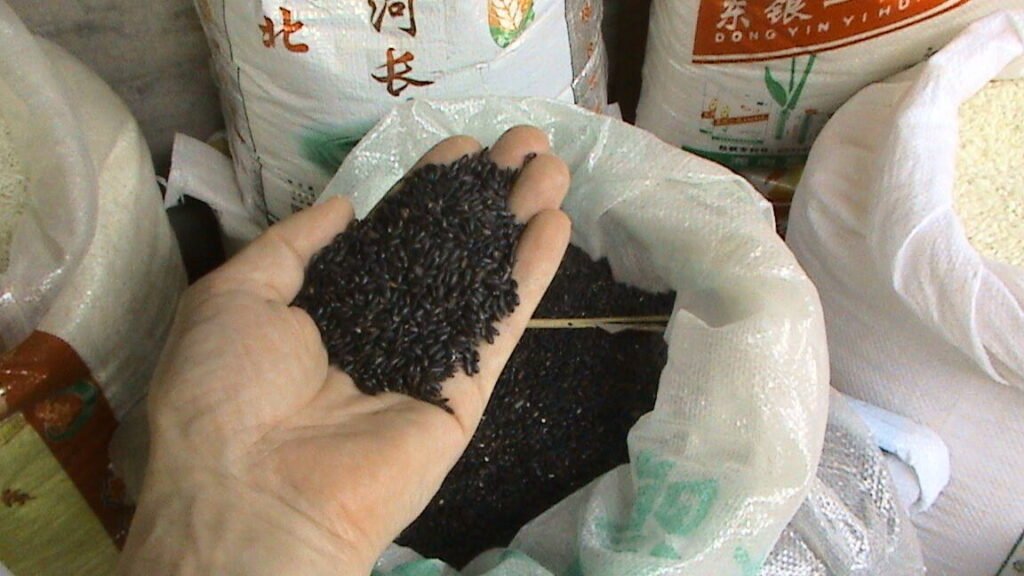
Our Black Rice Specifications
This is the spec we quote against. If a supplier gives you a cheaper black rice price per ton, put their spec next to this one and look at what’s missing.
| Parameter | Our standard |
|---|---|
| Product | Thai black rice, whole grain, unpolished |
| Types | Black glutinous, black non-glutinous, black jasmine type, Riceberry |
| Moisture | 13 to 14% max |
| Broken grains | 5% max |
| Admixture (white, red or brown kernels) | 0.2% max |
| Foreign matter | 0.1% max |
| Color | Deep purple to black, bran layer intact |
| Processing | Cleaned, destoned, color sorted |
| Crop | Latest crop, milled to order |
| Shelf life | 6 to 9 months in cool, dry storage; longer in vacuum packs |
| HS code | 1006.20 if unpolished (husked), 1006.30 if milled |
| Packing | 1kg and 5kg vacuum or PE bags, 25kg PP bags with liner, 1,000kg jumbo bags, private label |
| Loading | About 20 to 24 tons in a 20ft container, LCL available |
| Ports | Bangkok and Laem Chabang |
The admixture figure matters more on black rice than on almost anything else we sell. A few white kernels in a bag of black rice are obvious the minute it’s cooked, and retail customers notice. That’s one place where a cheap black rice price per ton usually cuts corners.
What Moves the Black Rice Price Per Ton
Prices for black rice don’t follow the white rice benchmark day to day, but they’re not random either. Here’s what pushes them up and down.
1. The crop
Most black rice is a main season crop, planted with the rains and harvested from around November. Prices are usually firmest in the months before harvest, when old stock runs short, and ease a little once new paddy comes in.
2. The variety
Riceberry and black jasmine cost more than plain black rice. Glutinous black rice is the cheapest. Same color, very different black rice price per ton.
3. Organic or conventional
Certified organic black rice carries a clear premium because the farms are certified, the yields are lower and the paperwork follows every lot. We cover this in more detail further down.
4. The Thai baht
We buy paddy in baht and sell in dollars. When the baht strengthens, the dollar price goes up even if nothing else changes. On fragrant rice, Thai exporters reckon every one baht move against the dollar shifts prices by around $30 to $35 a ton. Black rice moves the same way.
5. Packing
A 25kg PP bag is the cheapest way to ship. Vacuum packs, printed retail bags and boxes all add cost. On small retail packs the packing can add $150 to $300 to the black rice price per ton, sometimes more for complex printing.
6. Order size
A full container gets a better price than a mixed or part load. We do ship black rice by LCL because a lot of buyers start small, but the freight per ton is higher.
7. Freight and destination
FOB is only part of the cost. Ocean freight, insurance and your own port charges and duties come on top. More on that below.
Black Rice Price Per Ton by Packing Size
Here’s a rough idea of how packing changes the number, using standard black non-glutinous rice as the base. Figures are indicative and assume a full 20ft container.
| Packing | Rough effect on FOB price | Good for |
|---|---|---|
| 1,000kg jumbo bag | Base price, sometimes slightly lower | Repackers and food factories |
| 25kg PP bag with PE liner | Base price | Wholesale and foodservice |
| 5kg PE bag | Plus about $80 to $150 per ton | Cash and carry, restaurants |
| 1kg vacuum pack, plain | Plus about $150 to $250 per ton | Retail, online sellers |
| 1kg printed vacuum pack, your brand | Plus about $200 to $350 per ton | Private label retail |
If you’re launching a brand, have a look at our private label rice supplier guide. It explains artwork, minimum print runs and how long the first order takes. And our rice packaging for export article covers bag types and liners in more depth.
From FOB to Your Door: A Worked Example
Let’s say you want one 20ft container of standard black rice in 25kg bags, shipped to a port in Europe or North America.
- FOB price: say $1,000 per ton x 20 tons = $20,000
- Ocean freight: depends on the route and the month, often $1,500 to $4,000 for a 20ft box from Thailand
- Marine insurance: usually a small fraction of a percent of the cargo value
- Import duty: depends on your country and whether the rice is classed as husked (1006.20) or milled (1006.30)
- Port, clearance and inland trucking at your end
So a black rice price per ton of $1,000 FOB might land at $1,150 to $1,350 a ton in your warehouse, before duty. If you want us to price CIF to your port, we can. Our article on FOB vs CIF for rice import explains which one usually makes sense on a first order.
For white and jasmine rice we publish more detail on landed pricing in our Thai rice CIF price per metric ton guide, and the same logic applies here.
How Black Rice Compares to Other Thai Rice Prices
Buyers who already import Thai rice often want to know where black rice sits against what they buy now. Rough comparison, FOB Thailand, October 2026:
| Rice | Indicative FOB, USD per ton |
|---|---|
| Thai white rice 5% broken | About 470 to 475 |
| Thai Hom Mali jasmine (92% purity) | About 1,120 |
| Thai red rice | Usually between white rice and black rice |
| Thai black rice, standard | About 850 to 1,100 |
| Riceberry | About 1,200 to 2,100 |
Some of our buyers mix grades in one container. A distributor might take 15 tons of jasmine and 5 tons of black rice, which keeps their stock fresh and their cash flow sane. We do this regularly. The jasmine rice price per ton guide covers the jasmine side, and our red rice supplier post covers red rice if you want to add that too.
Organic Black Rice and What It Adds to the Price
Organic changes the black rice price per ton more than anything else on this list. Organic black rice is a separate product, not a label we stick on ordinary rice. The farms have to be certified, the paddy is kept apart from conventional rice at the mill, and every shipment travels with its own organic paperwork.
For Europe, that means an EU organic certificate and a certificate of inspection issued through the EU’s TRACES system before the rice leaves Thailand. For the US, the grower group and handlers need certification to the USDA National Organic Program.
All of that adds roughly $200 to $400 to the black rice price per ton, sometimes more for Riceberry. It’s worth it if your customers will pay for organic. If they won’t, conventional black rice with a clean residue test is the smarter buy.
How to Tell If a Cheap Offer Is Real
Black rice attracts some odd offers. We’ve seen quotes for so-called black rice at $300 to $400 a ton. At that price, something is wrong. Here’s what to check.
- Is it actually black rice? Some cheap offers turn out to be red or brown rice, or black rice mixed with darker paddy. Ask for a sample and cook it.
- Is the spec written down? Moisture, broken, admixture, crop year and packing should all be on the offer.
- Who is the seller? A real exporter can show you a company registration, a physical address and past shipping documents with names blacked out.
- How do they want to be paid? Anyone asking for a big deposit by wire before you’ve seen a contract or a sample should make you nervous. We work with signed contracts and a letter of credit on first orders.
- Will they accept independent inspection? If a seller resists SGS or another inspector checking the goods before loading, walk away.
A fair black rice price per ton from a real supplier won’t be the cheapest number you find online. It will be one you can actually ship.
Test Before You Buy
We send samples before any first order. When yours arrives, here’s what we suggest:
- Spread 100 grams on a white plate under good light. Count any white, red or brown kernels. You should find very few.
- Check for broken grains and dust. Whole, unbroken kernels should make up the bulk of the sample.
- Smell it. Fresh black rice smells clean and slightly nutty. Musty or stale means old stock.
- Cook a cup. Check the color of the water, the texture and the taste. Riceberry and black jasmine should have a light fragrance.
- If you sell into a regulated market, send a sample to a local lab for pesticide residues and heavy metals.
Do this with every supplier you’re comparing. It’s the easiest way to see whether the black rice price per ton you’re being quoted matches the rice in the bag.
Storage and Shelf Life
Black rice keeps its bran, and bran contains oil. That’s part of why it’s healthier than white rice, and it’s also why it doesn’t keep as long. Unpolished rice can go stale or rancid if it sits in heat and humidity.
- Keep it cool and dry, off the floor, away from walls.
- Rotate stock first in, first out.
- For hot, humid markets, use PE liners inside the bags or vacuum packs.
- Don’t order more than you can sell in a few months. A slightly higher black rice price per ton on smaller, more frequent orders often works out cheaper than writing off old stock.
When to Buy: A Rough Price Calendar
Timing won’t save you a fortune, but it helps. This is how the black rice price per ton tends to behave through a normal Thai year.
| Months | What usually happens |
|---|---|
| November to January | New crop paddy arrives. Supply loosens and prices often ease. |
| February to May | Steady trading. Good time to fix a contract for the year. |
| June to October | Old stock runs down before the next harvest. Prices are usually firmest. |
Weather can break this pattern. A dry year in the northeast can keep the black rice price per ton high well into the new crop. A big harvest can push it down early. We tell our regular buyers when we see a move coming, which is one reason a lot of them book quarterly contracts with us.
Getting a Better Black Rice Price Per Ton
You can’t control the crop or the baht, but you can control how you buy. These are the things that actually lower the price we can offer.
- Fill the container. A full 20ft box of one grade gets a better black rice price per ton than a part load.
- Keep packing simple. 25kg bags cost less than retail packs. Many buyers repack at home.
- Book ahead. A contract for several shipments over the year lets us buy paddy at the right time.
- Be flexible on the crop window. If you can take rice from the new crop instead of the tail of the old one, the price is often better.
- Mix grades. Adding black rice to a jasmine or white rice container spreads the freight and lets you test the market without a full load.
What doesn’t work is pushing a supplier below a sensible black rice price per ton. The rice that turns up at that price is rarely the rice you were promised.
Who Buys Black Rice From Us
Our black rice goes to a fairly mixed group of buyers around the world:
- Importers and distributors supplying Asian grocery stores in Europe, North America, Australia and the Middle East
- Health food and wellness brands packing under their own label
- Restaurant groups and caterers
- Food factories making desserts, snacks, rice flour and ready meals
- Online sellers who want small vacuum packs
Each one cares about something different, and each one ends up paying a different black rice price per ton. A dessert factory wants black glutinous rice and a sharp black rice price per ton. A wellness brand wants Riceberry, tight color and a good certificate of analysis. We quote to what you actually need.
Documents That Come With Every Shipment
Every container leaves with a standard set of papers, prepared before the ship sails:
- Commercial invoice and packing list
- Bill of lading
- Certificate of origin (Form E, Form D or the general form, depending on your country)
- Phytosanitary certificate
- Certificate of analysis for the lot
- Fumigation certificate if your market asks for it
- Inspection certificate from SGS or the inspector you choose
- Halal or organic certificates where they apply
None of this paperwork changes the black rice price per ton we quote; it is all included. Our bulk rice import documentation guide goes through each document and why customs asks for it. If you want the goods checked before they’re loaded, read about our pre-shipment inspection for rice.
Payment, Minimum Order and Lead Time
Minimum order on black rice is more flexible than on our commodity rice. We can ship part of a container by LCL, or mix black rice with other grades in one 20ft box.
For a first order we usually work with an irrevocable letter of credit at sight, so you pay against shipping documents and not before. Our guide on the letter of credit for rice import explains how that works step by step. Everything is set out in a signed sales contract before anything moves.
Lead time is usually two to four weeks from contract to loading, and the black rice price per ton we agree is fixed for that shipment once the contract is signed. Printed retail packs take longer because of artwork and bag production. We ship from Bangkok and Laem Chabang to buyers in Asia, the Middle East, Africa, Europe, the Americas and Oceania. Routes and transit times are on our shipping page.
Where to Follow Rice Prices
There’s no public daily black rice price per ton index, which is one reason buyers find it hard to judge offers. What you can follow is the wider Thai rice market. The World Bank commodity price data tracks Thai rice every month, and the Thai Rice Exporters Association publishes weekly export prices for the main grades. When white rice and jasmine move, black rice usually follows a few weeks later.
Frequently Asked Questions
What is the black rice price per ton today?
In October 2026, Thai black rice runs from about $750 a ton for black glutinous rice to $2,000 or more for premium Riceberry, FOB Bangkok. Ask us for today’s figure on your exact grade and packing.
Why is Riceberry more expensive than other black rice?
It’s a specific Thai variety with lower yields, a softer texture and a light fragrance. Brands ask for it by name, so it sells at the top of the black rice price per ton range.
What’s the minimum order?
We can ship black rice by LCL or mix it with other rice in one container. A full 20ft container holds about 20 to 24 tons.
Do you sell organic black rice?
Yes, with EU or USDA organic certification, depending on your market. Expect a premium of about $200 to $400 per ton.
Can you pack black rice under my brand?
Yes. We pack 1kg and 5kg retail bags, vacuum packs and 25kg bags with your artwork.
How long does black rice keep?
About 6 to 9 months in cool, dry storage, longer in vacuum packs. Buy in quantities you can sell through.
Get a Black Rice Quote
If you’re comparing offers, send us your grade, quantity, packing and destination port through our contact page. We’ll come back with a written black rice price per ton, the full spec, and a sample offer. No fees upfront, no pressure. If the numbers work for you, we’ll put it in a contract and ship on the date we agree.
Want to see the rest of what we grow and ship? Our rice for sale page lists every grade, from jasmine and parboiled to brown and red rice.