If you’ve been asked to source Thai Hom Mali jasmine rice export volumes for your business, you already know the hard part isn’t finding a supplier — it’s finding one whose rice actually matches what’s on the spec sheet when the container gets opened. We’re DThai Company Limited, and this is the grade we ship, why it costs what it costs, and what you need to have ready before you place an order.
We’re not going to pad this out with generic “why rice is great” filler. You’re here because you buy rice for a living, or you’re about to start, and you need real numbers: moisture, broken grain percentage, purity, packaging, lead time, and the paperwork that has to travel with every shipment. That’s what this guide covers, in the order a buyer actually needs it — and by the end of it, you should know exactly what a proper Thai Hom Mali jasmine rice export order looks like, whether you place it with us or someone else.
n
nn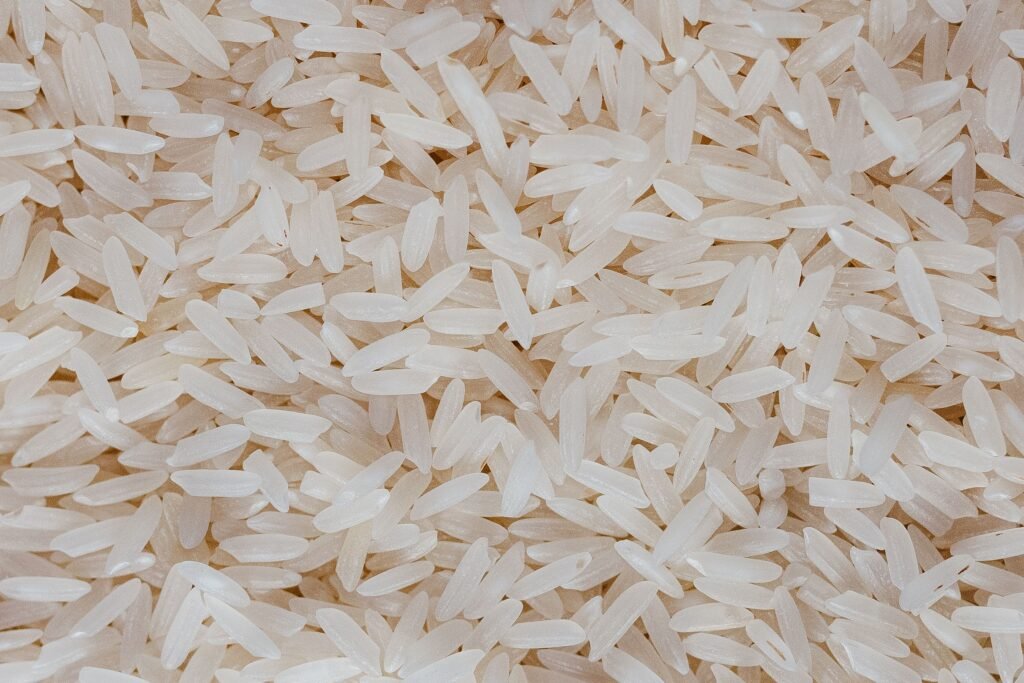
What “Thai Hom Mali” Actually Means
Hom Mali isn’t a marketing name Thai exporters slap on any long-grain white rice to charge more for it — or at least, it isn’t supposed to be. The term refers to a specific rice variety, Khao Dawk Mali 105, grown in defined regions of Thailand and milled to a national standard set by the Thai Industrial Standards Institute. Outside Thailand, most people know this rice simply as jasmine rice, and the two terms get used almost interchangeably in trade conversations, but there’s a real difference between generic jasmine rice and certified Thai Hom Mali jasmine rice export grade.
The standard that governs it is TIS 4004. It sets rules for grain purity, moisture, milling degree, and how much the rice is allowed to be blended with other varieties before it can no longer legally carry the Hom Mali name. Genuine Hom Mali also carries Geographical Indication status, similar in concept to how Champagne or Parmigiano-Reggiano are protected — the name is tied to where the grain is grown, not just how it looks in a bag. If you want the background on the botanical side of things, Wikipedia’s entry on jasmine rice covers the variety’s origins and growing regions in more depth than we need to get into here.
What matters for you as a buyer is this: when a supplier quotes you Thai Hom Mali jasmine rice export pricing that’s suspiciously close to standard 5% broken white rice, ask why. Genuine Hom Mali costs more to grow, mill, and certify, and the price should reflect that.
The Grade We Ship: Full Specification
Here’s what actually goes into a container when you order Thai Hom Mali jasmine rice export from us. We’re not going to hide this behind a “contact us for specs” wall — you should be able to compare it against any other quote you’re holding right now.
- Variety: Khao Dawk Mali 105 (KDML 105), certified Hom Mali under TIS 4004
- Purity: minimum 92% Hom Mali content, non-glutinous
- Grain length: 7.0mm and above, average length-to-width ratio consistent with GI standard
- Moisture content: 14% maximum
- Broken grains: 5% maximum for our standard export grade
- Chalky kernels: capped in line with TIS 4004 tolerances
- Milling degree: well-milled, double or triple polished depending on the order
- Foreign matter and admixture: kept to the low tolerances the standard requires — this is one of the easiest places for a cheaper supplier to cut corners, so it’s worth asking any competing quote for their actual test numbers, not just “premium quality” language
- Crop year: current season stock, harvested and milled to order rather than pulled from long-sitting warehouse lots
Every one of those numbers is verifiable through a certificate of analysis from an independent lab, and we send that certificate before the container sails, not after you’ve already paid the balance. If a supplier won’t show you lab results before shipment, that’s the conversation to have before you wire anything.
Packaging, Container Loads, and Private Label
Most of the buyers who order Thai Hom Mali jasmine rice export from us fall into one of two camps: distributors who want it in retail-ready bags, and food-service or repacking operations who want bulk.
For a typical Thai Hom Mali jasmine rice export order, standard packaging runs 1kg, 5kg, 10kg, 25kg, and 50kg woven or laminated bags, and we also handle private label runs if you’ve got your own branding and want it printed rather than shipped in generic packaging. A 20-foot container typically loads around 25 metric tons in 50kg bags; a 40-foot container runs closer to 27 metric tons. If you’re moving larger volumes, we can also arrange bulk container loading without individual bags for buyers with their own repacking facility on the receiving end.
None of this is one-size-fits-all — bag count, printing, and pallet configuration all get confirmed against your PO before we start production, because reprinting labels after milling has started is the kind of delay nobody wants.
How It Actually Cooks and Tastes
Specs matter, but at some point your customer is going to open the bag and cook it, and that’s where a lot of “Hom Mali” sold under the jasmine rice label falls apart. Genuine Thai Hom Mali jasmine rice export grade has a soft, slightly sticky texture once cooked — not the fluffy, separate-grain result you’d get from a basmati or a plain long-grain white rice — and a floral, faintly nutty aroma that comes from a naturally occurring compound in the grain itself, not from anything added during processing. If you cook a handful before it’s even boiling, you’ll usually catch a hint of it in the steam.
Color matters too. Well-milled Hom Mali should look uniformly white with a slight translucence, not chalky or opaque, and the grains should be long and slender rather than short and stubby. If a batch looks dull or has a lot of visibly broken or chalky grains mixed in, that’s usually a sign of either aggressive milling, older stock, or a lower grade being sold under a premium name. None of that shows up on a spec sheet the way it shows up in a pot.
This is also why we send physical samples before large orders when a buyer asks for them. Numbers on a certificate of analysis tell you the rice meets a standard; a sample lets your own quality team confirm it before you commit to a full container.
Who’s Actually Buying This, and Why
We ship Thai Hom Mali jasmine rice export orders to importers and distributors across a genuinely wide spread of markets — food-service groups in the Middle East, retail packers across Europe, wholesale distributors in North America, and buyers across Asia-Pacific who are re-exporting or supplying their own domestic retail chains. The demand pattern isn’t regional anymore; jasmine rice has moved from “ethnic aisle” to mainstream grocery shelf in most of the world, which is part of why the export volume out of Thailand keeps climbing year over year.
What ties these buyers together isn’t geography, it’s what they’re asking for: consistent grain quality between shipments, documentation that actually matches what’s in the container, and a supplier who answers the phone when there’s a question about a bill of lading. First-time buyers get the same pricing terms as accounts that have ordered from us for years — we don’t run a “prove yourself first” pricing tier, because that just pushes new buyers toward suppliers who cut corners to hit a lower quote.
Documentation, Lead Times, and Incoterms
This is the part that trips up first-time importers more than anything else, so we’ll go through it plainly.
A standard Thai Hom Mali jasmine rice export shipment travels with a certificate of origin, a phytosanitary certificate, a certificate of analysis from the mill or an independent lab, a packing list, a commercial invoice, and a fumigation certificate where the destination country requires it. Some markets add their own import permit or pre-shipment inspection requirement on top of that — if you’re not sure what your country needs, tell us the destination port and we’ll confirm before you commit to an order, rather than finding out when the container is already stuck in customs.
Lead time from a confirmed order to vessel departure typically runs four to six weeks, depending on the season and how much of the order needs fresh milling versus pulling from ready stock. We quote on standard Incoterms — FOB Bangkok or Laem Chabang is the most common structure our buyers use, though we’ll quote CIF or CFR if that’s what your import process needs. For a deeper walkthrough of the shipping side specifically, our shipping page breaks down port options and typical transit times by region.
Quality Control and Traceability
Every Thai Hom Mali jasmine rice export batch we sell is traceable back to a named mill — not a blended lot pulled together from wherever had stock that week. That matters more than it sounds like it should, because a lot of “Hom Mali” sold on the international market is quietly cut with cheaper long-grain rice to stretch volume, and the buyer usually only finds out when a customer complains that this shipment doesn’t smell or cook like the last one did.
We run purity checks before a batch is confirmed for export, and we’ll send lab results alongside the certificate of analysis so you’re not just taking our word for it. If you want to see the full breakdown of grades we carry beyond the Hom Mali line — including standard white rice, parboiled, and other varieties — our rice category page lists everything we currently export, and the Thai Hom Mali Rice product page has the order form and current stock status if you’re ready to move past the research stage.
We’ve also written a longer piece on how to tell genuine Hom Mali from blended or mislabeled rice, which is worth reading if you’ve been burned by a supplier before, or if this is your first time ordering and you want to know exactly what to check on arrival.
Where the Rice Actually Comes From
A lot of the Thai Hom Mali jasmine rice export volume that leaves Thailand each year traces back to the northeastern provinces — Surin, Roi Et, Sisaket, and the Thung Kula Ronghai plain in particular, an area farmers and millers have talked about for decades as producing some of the most consistent Hom Mali in the country. The soil there, combined with the growing season’s rainfall pattern, seems to matter more to grain quality than anywhere else Hom Mali is grown, which is part of why GI protection is tied to specific regions rather than the variety alone.
We work with mills in these regions directly rather than buying through a chain of middlemen, which is the main reason we can trace a batch back to a specific mill instead of shrugging and saying “somewhere in Thailand.” It also means when a crop year runs slightly different — a bit more or less rain than usual — we know about it before it becomes a surprise in your container, and we can tell you honestly if a particular month’s stock is running a touch higher on broken grain than normal.
None of this makes the rice cheaper. If anything, working with named mills rather than the lowest bulk-rate blender costs a little more. But it’s the difference between a supplier who can answer “where exactly did this batch come from” and one who can’t.
Pricing: What Actually Moves the Number
We don’t publish a flat price on this page, and honestly, any supplier who does is usually quoting one specific grade at one specific moment and hoping you don’t ask follow-up questions. Rice pricing moves with the season, the broken-grain percentage you’re ordering, current freight rates, and your Incoterm choice. What we can tell you is which factors actually move your final number: broken grain percentage is the biggest one (5% broken costs meaningfully more than 10% or 15%), followed by packaging (small retail bags cost more per ton to produce than bulk container loads), then freight, which depends entirely on your destination port and current shipping capacity.
The fastest way to get an accurate number is to send us your target grade, quantity, packaging preference, and destination port. We’ll come back with a real quote for your Thai Hom Mali jasmine rice export order, not a placeholder range, usually within a business day.
Mistakes We See First-Time Buyers Make
We’ve been on the export side of enough deals to know where new buyers usually get burned, and it’s rarely the big obvious stuff. A few things worth flagging before you commit to any Thai Hom Mali jasmine rice export order, from us or anyone else:
Trusting a quote with no broken-grain percentage attached. “Premium Hom Mali” without a stated broken percentage could mean 5%, could mean 15%. Ask for the number and put it in the contract, not just the invoice description.
Skipping the pre-shipment sample. It costs almost nothing to request a sample bag before a full container order, and it’s the cheapest insurance you’ll ever buy against a bad shipment. If a supplier is reluctant to send one, treat that as information.
Not confirming destination-country requirements in advance. Phytosanitary rules, fumigation certificates, and import permit requirements differ by country, and by the time a container is sitting in customs is the worst possible time to discover a missing document. Confirm this before you sign, not after.
Assuming “Hom Mali” and “jasmine rice” are always the same thing. They usually overlap, but a supplier quoting generic jasmine rice at Hom Mali prices — or the reverse — is either confused about their own product or hoping you won’t ask. Either way, get the variety and standard named explicitly in writing.
Paying the full balance before receiving shipping documents. Standard practice is a deposit to confirm the order, with the balance tied to shipping documentation, not to a promise. Any supplier asking for full payment weeks before the container even loads is asking you to carry all the risk.
How to Place an Order
If you’re ready to move forward, the process is straightforward. Tell us your quantity, grade, packaging, and destination, and we’ll send a formal quote with pricing, lead time, and payment terms. Once you confirm, we lock in mill allocation, confirm the packaging run, and start preparing documentation in parallel with milling, so you’re not waiting on paperwork after the rice is already bagged. Whether this is your first Thai Hom Mali jasmine rice export order or your fiftieth, the process stays the same — nobody gets bumped to the back of the queue because their order is smaller.
You can start that conversation directly through our wholesale page, or reach our team through the contact page if you’ve got questions before you’re ready to request a formal quote. Either way, someone who actually handles export orders will respond — not a generic inbox that takes a week to route your message to the right person.
Frequently Asked Questions
What’s the minimum order for Thai Hom Mali jasmine rice export?
Our standard minimum is one 20-foot container, roughly 25 metric tons. We can discuss smaller trial orders in some cases, but container-load pricing is where the economics work best for both sides.
How is Hom Mali different from regular jasmine rice?
“Jasmine rice” is a broad category used across several countries and rice types. Hom Mali is a specific, certified subset grown from the Khao Dawk Mali 105 variety in Thailand and governed by TIS 4004. All genuine Hom Mali is jasmine rice; not all jasmine rice sold internationally is genuine Hom Mali.
Can you ship to a market with strict import inspection requirements?
Yes. Tell us the destination country and we’ll confirm what documentation your customs authority requires before you commit to an order — phytosanitary certificates, fumigation certificates, and pre-shipment inspection requirements all vary by destination, and we’d rather flag that up front than after the container has sailed.
Do you offer private label packaging?
Yes, for orders that meet our minimum run size. Send us your artwork specs and we’ll confirm compatibility with our bagging line and timeline.
How long does a full order take from confirmation to shipment?
Four to six weeks is typical, depending on season and whether your order needs fresh milling or can be filled from ready stock. We’ll give you a firm date once your order is confirmed, not a vague range.
Will you send a sample before I commit to a container order?
Yes. We’d rather send a sample bag and answer questions up front than have a buyer receive a full container that doesn’t match expectations. It’s a small cost against a much bigger order.
What payment terms do you offer for a first order?
A deposit confirms the order, with the balance tied to shipping documents rather than a delivery promise. We can walk you through exactly how that split works once we’ve quoted your specific order.
The Bottom Line
Thai Hom Mali jasmine rice export isn’t a commodity where every supplier is interchangeable, whatever the sales pages suggest. Purity percentage, moisture control, mill traceability, and documentation accuracy all vary a lot between suppliers, and those differences show up in your warehouse, not on the quote sheet. We ship a certified grade, back it with lab results before the container leaves port, and quote the same terms to a first-time buyer as we do to a distributor who’s ordered from us for five years.
If you’re ready to compare a real quote against whatever you’re currently holding, get in touch through our wholesale page and tell us your grade, quantity, and destination. We’ll take it from there.