Buyers usually come to us already knowing the name of one rice — Hom Mali, jasmine, basmati — and it’s only once we start talking specs and destination market that they realize there are several other types of Thai rice for export worth comparing before they lock in an order. We ship close to a dozen distinct grades out of Thailand, and picking the wrong one for your market isn’t a small mistake — it’s the difference between a product that sells itself and one that sits on a shelf because the texture or aroma doesn’t match what your customers expect. Understanding the different types of Thai rice for export before you commit to a container is the cheapest research you’ll do in this entire process, and it’s the part most first-time buyers skip.
This is a working rundown, not a marketing brochure. We’re DThai Company Limited, and everything below is a type we actually carry, with the specs we actually ship against — not a generic description copied from somewhere else.
What We’re Covering
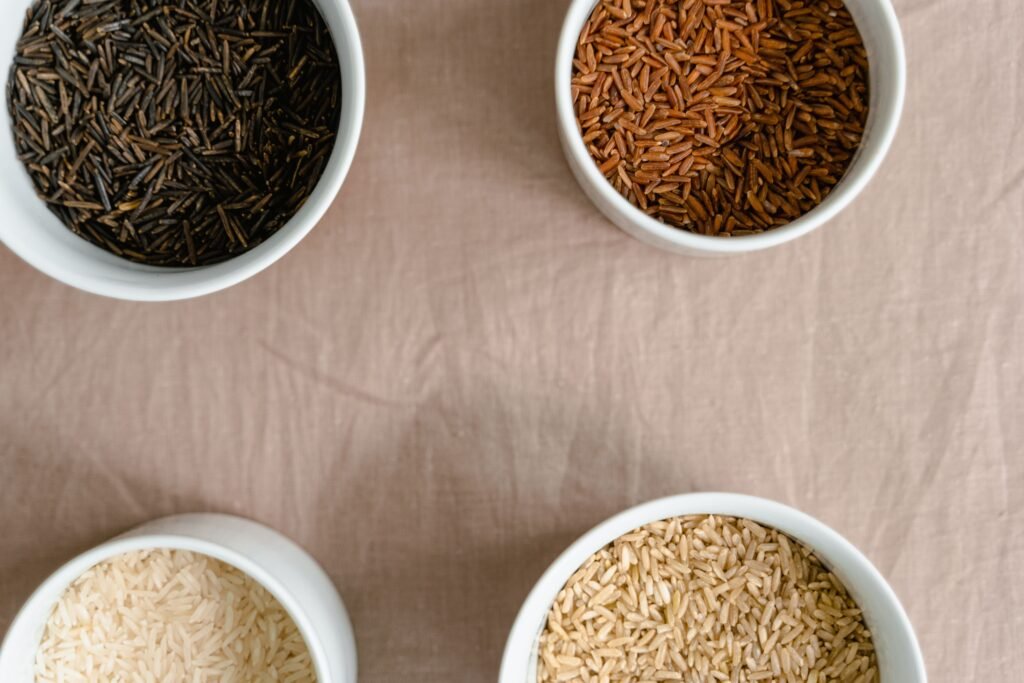
Here are the main types of Thai rice for export we move in bulk, roughly in order of how often buyers ask for them: Thai Hom Mali jasmine rice, standard Thai white rice, Thai fragrant rice, parboiled rice, Thai white glutinous (sticky) rice, black rice, Thai-grown basmati, Texmati, and Arborio. Each one serves a different kitchen, a different market, and in some cases a completely different customer than the others.
Thai Hom Mali Jasmine Rice
This is the one most buyers ask for first, and for good reason — it’s Thailand’s signature export grade. Genuine Hom Mali is grown from the Khao Dawk Mali 105 variety and certified under TIS 4004, with a minimum 92% purity requirement and grain length of 7.0mm and above. Moisture stays at 14% maximum, and broken grains run 5% for our standard export grade. Cooked, it’s soft and slightly sticky with a floral aroma that comes from the grain itself, not anything added during milling.
Buyers importing for retail shelves or premium food service almost always land here first. If this is the specific grade you’re comparing suppliers on, our Thai Hom Mali Rice product page has current stock and full specs, and we’ve written a longer breakdown of Thai Hom Mali jasmine rice export specifications if you want the deep version.
Thai White Rice (Long-Grain)
Standard long-grain white rice without the Hom Mali certification or the jasmine aroma — this is the workhorse grade for buyers who need consistent, affordable rice at volume rather than a premium aromatic product. It’s milled to a plainer standard, with broken grain percentages typically running higher than Hom Mali (5% to 15% depending on the grade you order), and it cooks fluffier and more separate than jasmine rice does. Food-service operations, institutional buyers, and repackers doing their own private-label blends tend to order this one. Full details are on our Thai White Rice product page.
Thai Fragrant Rice
This sits between Hom Mali and standard white rice — an aromatic long-grain rice that carries some of the jasmine character without meeting the strict purity and origin requirements to be certified Hom Mali. It’s a reasonable middle-ground option for buyers who want an aromatic product at a lower price point than certified Hom Mali, without dropping all the way to plain white rice. Check our Thai Fragrant Rice product page for current specs and availability.
Parboiled Rice
Parboiled rice goes through a partial boiling process before milling, which pushes nutrients from the bran into the grain and changes the texture significantly — it cooks up firmer and holds together better than regular milled rice, which is exactly why buyers in markets across West Africa and parts of the Middle East order it in volume. It also has a longer shelf life than standard milled rice and resists overcooking better, which matters for large-scale food-service kitchens. It’s one of the more overlooked types of Thai rice for export, mostly because it doesn’t get the marketing attention jasmine rice does, but the demand for it is real and steady.
Thai White Glutinous Rice (Sticky Rice)
Despite the name, glutinous rice contains no gluten — “glutinous” refers to the sticky, glue-like texture it takes on when cooked, caused by its starch composition being almost entirely amylopectin. This is the rice used for traditional sticky rice dishes and a wide range of dessert applications across Southeast Asian cuisine, and demand for it has grown well beyond Southeast Asia as that food culture spreads globally. We carry it in the same bag sizes as our other grades. See our Thai White Glutinous Rice product page for specs.
Black Rice (Forbidden Rice)
Black rice gets its color from anthocyanin, the same pigment family found in blueberries and purple cabbage, and it’s become a genuine specialty item rather than a niche curiosity — health-food retailers and higher-end restaurants stock it specifically because of that pigment and the nutritional story behind it. It’s a smaller-volume order for most buyers compared to white or jasmine rice, but the margins tend to be better, and demand has been climbing steadily. Details are on our Black Rice product page.
Thai-Grown Basmati
Basmati is traditionally associated with India and Pakistan, but Thailand grows a basmati-type long-grain rice that gives buyers an alternative supply source — useful when you want basmati character without being tied to a single country of origin for your supply chain. It has the long, slender grain and dry, separate texture basmati is known for, with a milder aroma than the Indian or Pakistani originals. Buyers diversifying their sourcing beyond South Asia often ask about this one specifically. Our Basmati Rice product page has the specs.
Texmati Rice
A basmati-jasmine hybrid variety, Texmati splits the difference between the two — a bit of the aroma jasmine rice is known for, combined with the longer, drier grain structure closer to basmati. It’s a smaller-volume specialty order for most of our buyers, generally going to distributors serving fusion or specialty retail rather than mainstream grocery. See our Texmati Rice product page for details.
Arborio Rice
Short-grain, high-starch rice grown for risotto and similar dishes that need rice to release starch as it cooks and build a creamy texture. This isn’t a traditional Thai variety, but we grow and mill it to the same export standards as everything else on this list, and it fills out orders for buyers supplying Italian or fusion restaurant supply chains who’d rather consolidate their rice sourcing with one supplier instead of running separate accounts. Check our Arborio Rice product page for current stock.
Why Buyers End Up Ordering More Than One Type
It’s rare for a distributor of any real size to stick to a single grade once they’ve been ordering for a year or two. A buyer who started with jasmine rice for retail shelves often adds parboiled once they land a food-service contract, or picks up basmati once a customer base with different cooking habits opens up. Consolidating multiple types of Thai rice for export under one supplier instead of running separate accounts with separate mills tends to simplify things considerably — one set of documentation processes to learn, one relationship to manage, one point of contact when something needs to be confirmed quickly.
Buyers who diversify across a few types of Thai rice for export also tend to weather price swings in any single grade better, since a jump in jasmine rice pricing during a tight season doesn’t hit their whole order the way it would if that was the only thing they bought. There’s also a seasonal angle some buyers don’t think about until their second or third year importing. Certain grades move faster around specific holidays or cultural events tied to the communities buying them, and having more than one type in your catalog smooths out demand that would otherwise spike and dip hard around a single product.
Storage and Shelf Life Differences Worth Knowing
Not every type of Thai rice for export behaves the same way once it’s sitting in your warehouse. Jasmine rice’s aroma fades gradually over time, and while it’s still perfectly edible well past a year, the fragrance that makes it desirable in the first place is strongest within roughly twelve months of milling — buyers running slower-moving retail inventory should account for that when deciding how much to hold at once. Parboiled rice, on the other hand, stores considerably longer with minimal quality loss, which is part of why it’s popular with buyers who need a longer runway between orders. Glutinous rice and black rice both benefit from being kept in a cool, dry environment away from humidity, since their starch and pigment characteristics are more sensitive to moisture uptake than standard milled rice.
None of this means any of these grades are fragile — properly bagged and stored rice from any category on this list holds up fine under normal warehouse conditions. It just means the “use it while it’s fresh” pressure varies by type, and that’s worth factoring into how much you order at once versus how often you reorder.
Specs at a Glance
Since specs vary by grade, here’s the general range across the types of Thai rice for export we ship most:
- Moisture content: 14% maximum, consistent across all grades
- Broken grains: 5% for premium grades like certified Hom Mali; up to 15% for standard white rice grades
- Purity: minimum 92% for certified Hom Mali; other grades graded per shipment against their own standard
- Milling degree: well-milled, double or triple polished depending on grade and market preference
- Packaging: 1kg, 5kg, 10kg, 25kg, and 50kg bags, or bulk container loading without individual bags
- Container capacity: roughly 25 metric tons in a 20-foot container, around 27 metric tons in a 40-foot container
These numbers hold across nearly all the types of Thai rice for export listed above, with the specific purity and grain-length figures adjusted per grade where a certification standard applies. Every batch, whichever type you order, gets its own certificate of analysis with lab-verified numbers for that specific shipment. If you want the full paperwork breakdown for your specific destination, we’ve written a detailed guide to bulk rice import documentation covering exactly what travels with each container.
How to Actually Pick the Right Type
Most buyers narrow this down by asking themselves three questions: what texture does my end customer expect, what price point am I selling at, and what’s actually available in volume from a reliable mill. A retailer selling to a diaspora community that grew up on jasmine rice isn’t going to be well served by parboiled rice, no matter how good the margin looks. A food-service operator running high-volume steam trays often prefers parboiled specifically because it holds up better under heat lamps than jasmine does.
Geography matters too, though not in a rigid way. Buyers across the Middle East and West Africa lean heavily toward parboiled and standard white rice for volume orders. Retail and food-service buyers across North America and Europe tend to order more Hom Mali and basmati-style grades, driven by both diaspora demand and a broader mainstream shift toward aromatic rice. Buyers across Asia-Pacific order the widest spread, from glutinous rice for traditional dishes to jasmine for everyday retail. None of this is a strict rule — we’ve shipped black rice to food-service buyers in every region — but it’s a reasonable starting point if you’re not sure where to begin.
It’s also worth talking to your own customers, or your sales data if you already have some, before locking in a decision. Buyer assumptions about which types of Thai rice for export will sell in a given market are wrong often enough that we’d rather see someone order a smaller trial quantity of two grades than commit a full container to a guess. The cost difference between a trial order and a full container is small compared to the cost of a container full of rice nobody wants to buy.
Mistakes Buyers Make When Choosing a Type
We see the same handful of mistakes repeat across different buyers, regardless of market.
Assuming “jasmine rice” and “Hom Mali” always mean the same product. They usually overlap, but a supplier can call something jasmine rice without it meeting the Hom Mali purity and origin standard. If the certification matters to your customers, ask for it explicitly.
Choosing a grade based on price alone. The cheapest type of Thai rice for export in a given category is often cheap because the broken grain percentage is higher or the crop is older stock. That’s fine for some uses and wrong for others — know which one you’re getting before you commit.
Not sampling before a full container order. Texture and aroma are hard to judge from a spec sheet alone. A small sample bag costs almost nothing next to the cost of a container that doesn’t match what your customers expect.
Overlooking niche grades that actually fit better. Buyers default to jasmine rice because it’s the name they know, when parboiled, basmati, or even Arborio might genuinely serve their specific customer base better. It’s worth asking what else is available before assuming the familiar option is the right one.
Ordering a full container before understanding local labeling rules. Some destination markets have specific labeling requirements for rice type, origin, and grade that differ from what’s printed on a standard export bag. This is worth confirming with your own regulatory contact before the container ships, not after it’s sitting at customs with a label that doesn’t meet local requirements.
Getting Started
Tell us which type — or types — you’re considering, your target quantity, packaging preference, and destination port, and we’ll send a formal quote with full specs for each grade you’re comparing. If you’re still deciding between two or three types, we’re happy to talk through which one actually fits your market rather than just pushing whichever grade has the best margin for us. We’d rather spend twenty minutes on a call narrowing down the right types of Thai rice for export for your specific customers than sell you a container you’ll be hesitant to reorder. Start that conversation through our wholesale page, or browse everything currently available on our rice category page first.
Frequently Asked Questions
What are the main types of Thai rice for export?
The grades we ship most are Thai Hom Mali jasmine rice, standard Thai white rice, Thai fragrant rice, parboiled rice, Thai white glutinous rice, black rice, Thai-grown basmati, Texmati, and Arborio. Specs and typical buyers vary by grade.
Which type of Thai rice is best for retail packaging?
Hom Mali jasmine rice is the most common choice for retail shelves, particularly where customers already recognize the name. Basmati and Texmati also do well in retail contexts serving specialty or diaspora markets.
Is parboiled rice cheaper than jasmine rice?
Generally yes, though pricing depends on broken grain percentage, packaging, and freight for both. Parboiled is typically ordered for its texture and shelf-life advantages in food-service contexts, not primarily as a cost-saving substitute.
Can I order a mix of different rice types in one container?
Yes, within reason — mixed containers are common for buyers testing a few grades or supplying multiple product lines. Talk to us about your specific mix and we’ll confirm what’s practical for a single shipment.
Do all types of Thai rice for export carry the same documentation?
The core documents — certificate of origin, phytosanitary certificate, certificate of analysis, and so on — apply across all grades. Destination-specific requirements like halal certification depend on your market, not the rice type.
What’s the minimum order if I want to try more than one type?
Our standard minimum is one 20-foot container per order, but we can discuss splitting that container across two or three grades if you’re testing multiple types before committing to volume on any single one.
Which type of Thai rice lasts longest in storage?
Parboiled rice generally holds its quality longest with minimal degradation. Aromatic grades like jasmine and Hom Mali are best used within about a year of milling to preserve the fragrance that makes them worth buying in the first place, though they remain safe to eat well beyond that.
Do you offer samples of different rice types before I order a container?
Yes. We’d rather send small sample bags of the types of Thai rice for export you’re weighing against each other than have you commit to a full container based on a spec sheet alone.
Are specialty types like black rice and Arborio harder to source consistently?
They’re lower-volume than jasmine or white rice, so lead times can run slightly longer depending on mill availability, but we carry both regularly and can confirm current stock and timing before you commit to an order.
The Bottom Line
There isn’t one correct answer among the types of Thai rice for export — the right one depends entirely on your customer, your price point, and what’s actually available at the volume you need. What we can offer is a straight answer about specs, availability, and which grade genuinely fits your market, rather than steering you toward whichever one is easiest for us to move that month. If you’re ready to compare a few types side by side, get in touch through our wholesale page and tell us what you’re sourcing for.
If you’re specifically sourcing the specialty end of our rice range, our dedicated guides on black rice supplier sourcing and working with a Basmati rice exporter Thailand partner cover both in more depth than fits in this overview.