“Export quality” gets printed on a lot of rice quotations, and most of the time it doesn’t mean much more than “we’re willing to put it on a ship.” Export quality Thai Jasmine Rice should mean something specific and testable: moisture within a defined range, a stated broken-grain percentage, low admixture, and documentation that backs all of it up. If a supplier can’t point to numbers behind the phrase, it’s just two words on an invoice.
We’re DThai Company Limited, and we ship export quality Thai Jasmine Rice to buyers across the Gulf, Africa, Europe, the Americas, and Asia-Pacific. This guide covers what the phrase should actually mean, the standards and tests behind it, and the questions worth asking any supplier who uses it in a quotation.
What “Export Quality” Should Actually Mean
Export quality Thai Jasmine Rice should meet, at minimum, a defined moisture ceiling, a stated broken-grain percentage, a low admixture level, and freedom from live insects, mold, and foreign matter beyond a small tolerance. These aren’t arbitrary numbers, they’re the actual thresholds that determine whether rice survives a multi-week sea voyage without spoiling, clumping, or attracting pests in the container. A supplier using the phrase “export quality” without being able to state these figures is using marketing language, not a technical claim.
The Codex Alimentarius standard for rice, jointly maintained by the FAO and WHO, lays out internationally recognized definitions for moisture, foreign matter, and grading terminology used across the global rice trade. It’s a useful independent reference if you want to understand the baseline that “export quality” should be measured against, rather than taking a supplier’s word for what the phrase means.
The Specifications Behind the Phrase
| Specification | Export Quality Threshold | Why It Matters |
|---|---|---|
| Moisture | 14% max | Higher moisture risks mold and insect activity during a multi-week voyage |
| Broken grains | 5% max for premium grade | Affects appearance and shelf presentation, not taste |
| Admixture | 0.2% max | Measures foreign matter or off-variety grains mixed into the batch |
| Grain length | 6.8mm to 7.2mm average | Uniformity is a visible mark of proper grading |
| Live insects | Zero tolerance | An automatic rejection point for any legitimate export shipment |
Every one of these should appear on the Certificate of Analysis for the specific lot shipping, not as a generic range pulled from a brochure. If the numbers on the actual certificate don’t match what export quality Thai Jasmine Rice was quoted at, that’s a discrepancy worth raising before the container leaves port.
How Testing Actually Happens
Before any lot is approved as export quality Thai Jasmine Rice, it goes through moisture testing with a calibrated meter, visual and mechanical sorting to measure broken grain and chalky grain percentages, and a check for admixture, other rice varieties or foreign material mixed into the batch. Fumigation happens ahead of loading to address any pest risk, with a Fumigation Certificate issued as proof. For buyers who want independent confirmation rather than relying on the exporter’s own internal testing, third-party inspection through SGS or an equivalent surveyor can verify these figures before the container is sealed.
We test every lot for these figures before approving it as export quality Thai Jasmine Rice, and the results go on the Certificate of Analysis that ships with the order, not just a generic spec sheet handed out to every buyer regardless of what that specific lot actually tested at.
Grading Terminology Explained Plainly
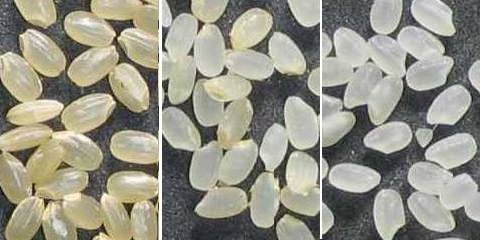
When a quote for export quality Thai Jasmine Rice states “5% broken max,” that’s not filler language, it’s the actual grading terminology used across the international rice trade. Broken percentage measures how many grains snapped during milling. Admixture measures foreign matter or off-variety grains. Chalky grains are kernels with an opaque, starchy appearance rather than the clear, translucent look genuine jasmine rice should have. Lower numbers across all three cost more to achieve because they require tighter sorting, which is exactly why a 5% broken grade sits at a real premium over a 25% broken grade even though both cook up almost identically.
Moisture content matters just as much as any of the above. Too high, and export quality Thai Jasmine Rice risks mold or insect activity during a multi-week sea voyage. Too low, and you’re effectively paying ocean freight on air rather than rice. 14% is the standard safe ceiling for shipments moving by sea, and it’s one of the first figures worth confirming on any quotation.
Documentation That Should Accompany It
- Certificate of Origin, confirming Thailand as the country of production
- Certificate of Analysis, with the actual moisture, broken-grain, and admixture readings for the shipping lot
- Phytosanitary Certificate, confirming the shipment meets plant health import requirements
- Fumigation Certificate, confirming pest treatment ahead of loading
- Packing List, Commercial Invoice, and Bill of Lading for customs clearance
Halal and Health Certificates are available on request depending on your destination market. Export quality Thai Jasmine Rice without a complete, matching set of these documents is a bigger operational risk to your import process than almost any price difference you’d save elsewhere.
Mistakes Buyers Make Assuming “Export Quality” Is Enough
- Accepting the phrase “export quality” without asking for the actual moisture and broken-grain figures behind it
- Comparing prices across suppliers without confirming they’re quoting the same broken-grain grade and crop year
- Skipping the sample and cook test stage to save a week, then discovering an aroma or texture issue after a full container has shipped
- Not asking whether independent inspection is available before assuming the exporter’s own certificate is sufficient
- Ordering old-crop stock at a discount without realizing aroma has already faded even though the spec sheet still technically checks out
Why Crop Year Belongs in the Export Quality Conversation
A rice sample can pass every export quality Thai Jasmine Rice threshold on moisture, broken grain, and admixture, and still have noticeably faded aroma if it’s carryover stock from a prior harvest sitting in a warehouse for over a year. None of the standard tests directly measure aroma strength, so crop year functions as a practical proxy buyers should ask about specifically. We disclose crop year on every quotation for exactly this reason, since it’s the detail a spec sheet alone won’t tell you.
Third-Party Verification Worth Requesting
For a large first order, it’s reasonable to request an independent surveyor, SGS or an equivalent inspection company, verify export quality Thai Jasmine Rice against the agreed specification before the container is sealed. This costs a modest fee relative to the size of a container order and gives you confirmation from someone other than the seller that the shipment matches what you agreed to pay for. A supplier who resists a reasonable request for third-party inspection is telling you something worth paying attention to before you commit further.
FOB and CIF for Export Quality Shipments
Export quality Thai Jasmine Rice is typically quoted FOB (Free on Board), where the exporter’s responsibility ends once the rice is loaded onto the vessel at a Thai port, or CIF (Cost, Insurance, and Freight), where the exporter arranges shipping and insurance to your named destination for one bundled price. Neither is inherently better. FOB usually works out cheaper if you already have a freight forwarder and shipping relationships, while CIF is simpler for a first-time buyer who’d rather budget against one number. Whichever term you use, confirm the export quality specification is written into the same document as the Incoterm, not treated as a separate, looser conversation.
Nutritional Basics
Grading tier doesn’t change the underlying nutrition much. Per 100g cooked, export quality Thai Jasmine Rice runs roughly 130 to 150 calories, with 28 to 30g of carbohydrate, 2 to 3g of protein, and under half a gram of fat, plus small amounts of thiamine, folate, and manganese. It’s not a significant fiber source in its milled, white form. If your retail program needs harder figures for a formal label, we’d point you toward a proper lab analysis rather than a general estimate, and can arrange third-party testing on a specific lot if needed.
Storage Once It Reaches Your Warehouse
Meeting export quality thresholds at the point of loading doesn’t guarantee the rice stays that way if it’s stored poorly after arrival. Keep it off the floor on pallets, in a cool, dry, ventilated space away from direct sunlight and anything with a strong odor, since milled rice absorbs nearby smells more readily than most buyers expect. Check the shipment against the packing list and Certificate of Analysis promptly on arrival, while any discrepancy is still easy to raise and resolve, rather than weeks later once the rice has already moved into general stock.
Why Thailand Became a Reference Point for Export Quality
Thailand has exported rice in serious volume since the 1960s and 70s, and jasmine rice specifically became one of its highest value-per-ton categories as shipping and milling infrastructure matured. That decades-long trade history is part of why export quality Thai Jasmine Rice carries the reputation it does. Buyers built expectations around Thai grading terminology and documentation over a long period, and those expectations became something close to an informal industry benchmark even outside any single formal standard. It also means there’s a long paper trail of established practice behind terms like broken percentage and admixture, so a buyer new to the trade isn’t inventing the framework from scratch, just learning a vocabulary that’s been consistent for decades.
How We Handle Export Quality at DThai
Every batch of export quality Thai Jasmine Rice we ship is tested for moisture, broken-grain percentage, admixture, and chalkiness before approval, and we keep records tied to the specific mill lot for each shipment. If a buyer raises a quality question after a container arrives, we can pull the actual production and testing data instead of offering a generic response. We also disclose crop year on every quotation, since a spec sheet alone doesn’t capture aroma, and aroma is a large part of what buyers are actually paying for with this rice.
We’d rather lose a price-only comparison to a cheaper quote than ship a container that technically passes a spec sheet but doesn’t match the sample a buyer approved. That’s really the whole standard behind how we define export quality Thai Jasmine Rice internally, not just what clears customs, but what actually matches what was promised.
Packaging Formats for Export Shipments
- 5kg and 25kg PP or PP-laminated bags for wholesale and food-service distribution
- 50kg bags for buyers running their own repackaging line
- 1,000kg jumbo bags for industrial or further-processing buyers who don’t need consumer-facing packaging
- PP-laminated bags where moisture protection matters more, coastal climates or long transit routes especially
- Custom private label printing for buyers building their own retail brand around export quality Thai Jasmine Rice
Packaging choice affects more than presentation. PP-laminated bags hold up better against humidity during long ocean transit than plain woven PP, which matters for shipments heading to tropical or high-humidity destination ports where a standard bag might let in enough moisture to push the rice above safe storage levels before it even reaches your warehouse.
Who Actually Needs This Level of Documentation
Not every buyer pushes as hard on export quality Thai Jasmine Rice documentation as they probably should. Retail brands with formal food safety compliance requirements, government or institutional procurement contracts, and buyers in markets that have dealt with mislabeled or substandard rice before tend to be the most rigorous about verifying every certificate before releasing payment. Smaller distributors and first-time importers sometimes skip steps simply because nobody explained early on which documents actually matter and which are closer to formalities. If you’re not sure which category you fall into, it costs nothing to ask for the full documentation set and review it before your first order, even if you don’t end up needing every certificate for your specific market.
Larger buyers with recurring container orders often build their own internal checklist over time, essentially formalizing the questions in this guide into a standard intake process every new supplier has to pass before receiving a purchase order. That’s a smart habit regardless of company size, since it turns a one-time vetting effort into a repeatable process instead of relitigating trust with every new supplier relationship.
Ordering and Lead Times
Our practical minimum is one 20-foot container, roughly 25 metric tons, priced FOB or CIF depending on your destination. Once a deposit clears, we typically load and ship within 10 to 20 days depending on how much of the order needs fresh milling. We load out of Bangkok and Laem Chabang, with transit time ranging from about a week for regional Asian routes to five or six weeks for the Americas.
Our contact page reaches the export desk directly, and our guide to importing rice from Thailand covers the broader import process if this is your first time bringing in a container.
Frequently Asked Questions
What does “export quality” actually mean if there’s no single legal standard?
It should mean the rice meets defined, testable thresholds for moisture, broken-grain percentage, and admixture, backed by a Certificate of Analysis for the specific lot. The Codex Alimentarius rice standard provides an internationally recognized reference point, though individual exporters can grade tighter than that baseline.
Can I get a sample before ordering export quality Thai Jasmine Rice in bulk?
Yes. We send a pre-shipment sample with a Certificate of Analysis so you can verify grain, aroma, and moisture yourself before committing to a full container.
Can I arrange my own inspection instead of relying on the supplier’s certificate?
Yes, and a legitimate exporter should welcome it. We routinely accommodate third-party inspection through SGS or an equivalent surveyor for buyers who want independent verification before a container ships.
What’s the minimum order?
One 20-foot container, roughly 25 metric tons, is our practical minimum for standard export pricing on export quality Thai Jasmine Rice.
Do you ship worldwide?
Yes. We’ve shipped export quality Thai Jasmine Rice to buyers across West Africa, the Middle East, Europe, and North America, with pricing quoted FOB or CIF depending on your destination port.
Does export quality automatically mean current-crop rice?
Not necessarily. A rice lot can meet moisture and broken-grain thresholds while being older stock with faded aroma. Always ask for crop year specifically, since none of the standard export quality tests directly measure how much aroma has been lost in storage.
What happens if a document is missing when the container arrives?
It can delay customs clearance significantly, which is exactly why confirming the full document list before the container ships matters more than it might seem. We provide the complete standard set with every shipment specifically to avoid this kind of delay on your end.
If you want a quotation that actually states the numbers behind “export quality” instead of just the phrase, send us your target volume and destination and we’ll get real figures back to you within a business day.