If you’re looking for an A1 super broken rice supplier, you probably already know what you need it for: brewing, rice flour, noodles, snacks, animal feed, or simply affordable rice for a price-sensitive market. We’re DThai Company Limited in Bangkok, and we sell Thai A1 Super 100% broken rice in 25kg and 50kg bags to buyers worldwide. This page covers what A1 Super actually is, the specs we load to, how the price is set, who buys it, and what to check before you order.
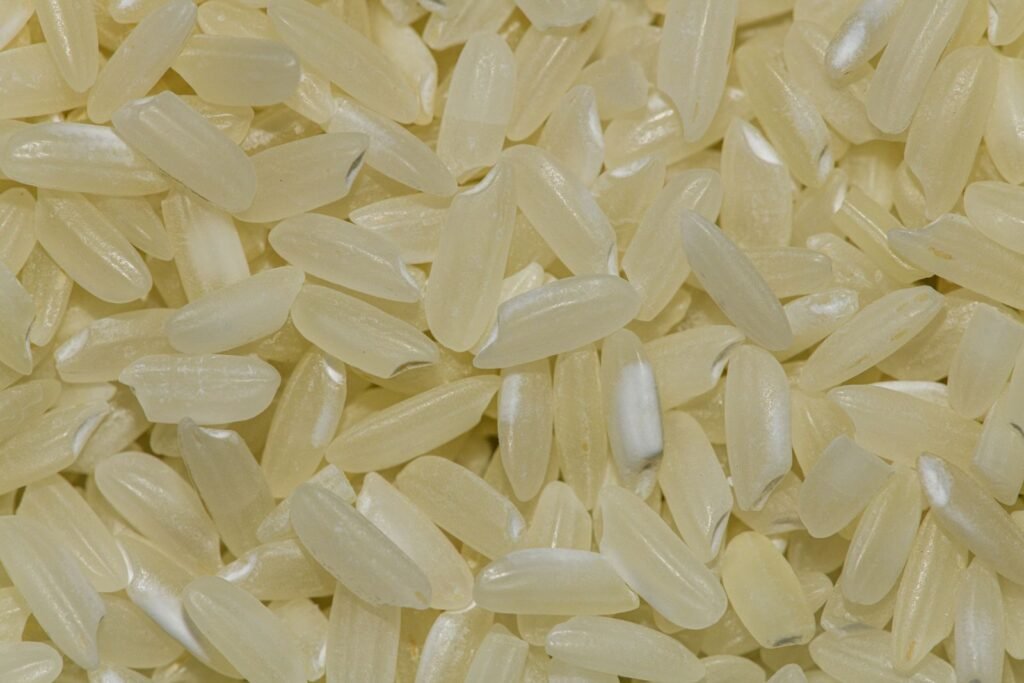
Table of Contents
What Is A1 Super Broken Rice?
Before picking an A1 super broken rice supplier, it helps to know exactly what the grade means. A1 Super is a grade of 100% broken white rice under the Thai rice standard. It’s made up of the broken pieces that come out of milling, separated from whole grains and sorted by size.
Broken rice isn’t damaged or defective rice. When paddy is milled, roughly half comes out as whole white rice, and something like 16% comes out as broken pieces. The rest is husk and bran. Mills use sieves and graders to separate the pieces by size, and the larger, cleaner pieces go into the A1 Super grade.
“Super” matters. Under the Thai system, A1 Super sits above A1 Special, which is a slightly lower grade. When the World Bank tracks Thai broken rice prices, it uses A1 Super as its benchmark today and used A1 Special before 2006. So when an A1 super broken rice supplier quotes you, make sure the grade on the offer really says A1 Super, not A1 Special or simply “broken rice.”
Why Buyers Choose Broken Rice
Broken rice cooks and tastes like the rice it came from. It’s just in smaller pieces. That makes it ideal for any use where the shape of the grain doesn’t matter:
- Brewing beer and rice spirits, where rice is a fermentable adjunct
- Rice flour for noodles, rice paper, bakery and gluten-free products
- Snack foods, crackers and puffed rice
- Baby food and cereals
- Animal feed and pet food, including aquaculture feed
- Everyday cooking in markets where broken rice is part of the local diet, from West African dishes like thieboudienne to Vietnamese com tam
Because it costs less per ton than whole-grain white rice, a good A1 super broken rice supplier can save a food factory a lot of money over a year without changing the end product.
Our A1 Super Broken Rice Specifications
This is what we load to as an A1 super broken rice supplier. Every lot is tested before loading and you can appoint your own inspector. Exact limits go into your contract.
| Parameter | A1 Super 100% broken white rice |
|---|---|
| Grade | A1 Super, Thai rice standard |
| Origin | Thailand, current crop |
| Type | 100% broken white rice, well milled |
| Moisture | 14% max |
| Whole grains | Minimal, as agreed |
| Foreign matter | Very low, as agreed |
| Paddy grains | Very low, counted per kg, as agreed |
| Damaged and yellow kernels | Low, as agreed |
| Color | White, cleaned and polished |
| Packing | 25kg or 50kg PP woven bags, jumbo bags on request |
| Container load | About 25 tons per 20ft container |
| Load port | Bangkok or Laem Chabang |
If your use is technical, such as brewing or flour milling, tell us what matters most to you. Brewers often care about moisture and foreign matter. Flour mills sometimes want a specific piece size. A good A1 super broken rice supplier should be able to match the lot to the job.
You’ll find the rest of our range on the rice for sale page, including Thai white rice, parboiled rice and jasmine rice.
A1 Super vs Other Broken Rice Grades
Broken rice is sold in several grades, and the names cause confusion, even among buyers who’ve used an A1 super broken rice supplier before. Here’s a simple comparison.
| Grade | What it is | Typical use |
|---|---|---|
| A1 Super | Larger, cleaner 100% broken white rice pieces | Food, flour, brewing, quality feed |
| A1 Special | Slightly lower grade of 100% broken rice | Feed, industrial uses, price-driven markets |
| Brewers’ rice | Very small broken pieces | Brewing, feed |
| 25% broken white rice | Whole rice with 25% brokens mixed in | Low-cost table rice |
| 100% broken from other origins | Broken rice from Vietnam, India, Pakistan or Myanmar | Varies by origin and spec |
A1 Super isn’t the same as “25% broken” white rice. That’s mostly whole grains with a quarter brokens. If you want rice for the table that’s cheaper than 5% white rice, 25% may suit you better. If you want broken pieces for processing, A1 Super is the grade.
For a full rundown of Thai grades, see our guide to the types of Thai rice for export.
How the Price Is Set
No A1 super broken rice supplier can give you a single fixed price, but the market is well documented. The World Bank’s commodity price data tracks Thai A1 Super broken rice FOB Bangkok every month, alongside Thai 5% and 25% white rice.
Here’s how 2026 has gone so far, in plain terms. Early in the year, Thai A1 Super was trading somewhere around the mid-$350s to mid-$360s per ton FOB. Prices climbed through the first half as Thai supplies tightened after the harvest, and by June the World Bank’s monthly figure for A1 Super was close to $470 per ton, against about $494 for Thai 5% white rice.
That gap is the point. A1 Super usually trades below whole-grain white rice. How far below changes with supply, demand from feed and brewing buyers, and competition from Vietnamese and Indian broken rice. Any A1 super broken rice supplier quoting you should be able to explain where their price sits against the white rice market.
Ask us for today’s figure. We’ll quote FOB, CFR or CIF to your port, in the packing you need.
What’s in a Quote
When we send you a price as your A1 super broken rice supplier, it covers these layers:
- The market price for A1 Super at the mill
- Cleaning, grading and packing into your chosen bags
- Inland transport and container loading
- Inspection and fumigation
- Ocean freight and insurance if you buy on CFR or CIF terms
On top of that, your own country adds import duty, port costs and trucking. Some countries treat broken rice differently from whole rice at customs, so check the duty with your clearing agent before you compare offers. If you’re new to Incoterms, our guide on FOB vs CIF for rice import explains how each one changes the price.
Thai Broken Rice vs Other Origins
Thailand isn’t the only source of broken rice. Vietnam, India, Pakistan and Myanmar all export it, often at lower prices. So why pick a Thai A1 super broken rice supplier?
- Consistency. Thai mills grade broken rice to a published national standard. A1 Super from one shipment tends to look like A1 Super from the next.
- Cleanliness. Thai export broken rice is usually well cleaned and polished, which matters for food uses.
- Paperwork. Thailand has a long-established export system for phytosanitary, fumigation and origin certificates.
- Mixed loads. You can combine broken rice with jasmine, white or parboiled rice from the same supplier.
Other origins can be cheaper per ton, and for some feed uses that may be the right call. For food processing and brewing, many buyers find Thai A1 Super worth the difference.
Who Buys A1 Super Broken Rice
Broken rice buyers fall into a few groups.
Breweries and distilleries
Rice adds a clean, light character to beer and is a common base for spirits. Brewers want low moisture, few foreign particles and steady quality from lot to lot.
Rice flour and noodle makers
Broken rice is the natural raw material for rice flour. Flour mills often prefer A1 Super because it’s clean and white, which keeps the flour bright.
Snack and cereal producers
Crackers, puffed rice, rice cakes and breakfast cereals. Here the price per ton matters, but so does food safety.
Feed and pet food companies
Broken rice is a good energy source for livestock, poultry, fish and pets. Feed buyers sometimes take A1 Special or brewers’ rice, but many choose A1 Super for better quality control.
Importers and wholesalers
In markets where broken rice is a daily food, importers buy A1 Super to sell in 25kg and 50kg bags. West Africa is one of the biggest of these markets. If you’re buying for West Africa, see our guide for buyers looking for a Thai rice supplier for West Africa.
Each group judges an A1 super broken rice supplier differently. A brewer will pay a bit more for steady moisture. A wholesaler will push hardest on price. We quote each one based on what they actually need.
Packing Options
As an A1 super broken rice supplier, we pack in:
- 25kg PP woven bags, easy to carry by hand
- 50kg PP woven bags, the most common export size
- Jumbo bags of around 1,000kg for factories with forklifts and hoppers
- Your own printed bags, if you sell under your own brand
For private label packing, read our guide on working with a private label rice supplier. For bag sizes, liners and markings, see rice packaging for export.
A 20ft container takes about 25 tons. Our page on how many tons of rice in a 20ft container explains why.
Quality Checks Before Loading
Broken rice is easy to cut with lower grades, so inspection matters even more than with whole rice. Before every shipment, we check:
- Grade and piece size against the A1 Super standard
- Moisture
- Foreign matter, stones and husk
- Paddy grains and whole grains mixed in
- Yellow and damaged pieces
- Insect activity
- Bag weight and markings
- Container condition before stuffing
You can appoint SGS or another independent surveyor to check the rice at loading. Our guide to pre-shipment inspection for rice explains what the inspector does. Every shipment is also fumigated and comes with a phytosanitary certificate. Any A1 super broken rice supplier who resists inspection is one to avoid.
Storage Tips After Arrival
Even the best A1 super broken rice supplier can’t control what happens in your warehouse. Broken rice has more exposed surface than whole grains, so it can pick up moisture and attract insects faster if stored badly. A few simple habits keep it in good shape:
- Store bags on pallets, off the floor and away from walls.
- Keep the warehouse dry and well ventilated.
- Use stock in the order it arrived. First in, first out.
- Check for insects regularly, especially in hot, humid months.
- Don’t stack bags higher than your warehouse floor and bags can safely take.
Stored properly, A1 Super keeps well for many months. For flour or brewing, many buyers like to use it within a few months of arrival for best freshness.
Documents You’ll Receive
Every container from us as your A1 super broken rice supplier comes with the usual export paperwork:
- Commercial invoice and packing list
- Bill of lading
- Certificate of origin
- Phytosanitary certificate
- Fumigation certificate
- Quality and weight certificate from the inspection company
- Insurance certificate on CIF terms
Some markets need extra papers, such as a health certificate or halal certificate. Tell us at the quote stage. Our guide to bulk rice import documentation goes through each document in detail.
Payment and Minimum Order
Our minimum order is one 20ft container, about 25 tons of A1 Super broken rice.
For a first order, most buyers pay by letter of credit at sight. It protects both sides while we get to know each other. Our guide on the letter of credit for rice import explains how it works step by step. Regular buyers can move to other terms over time, and we can set up a supply contract for steady monthly volumes.
Lead time is usually two to four weeks from contract to loading, depending on the lot size and vessel schedules.
Questions Brewers and Flour Mills Ask
Technical buyers usually ask us the same handful of things before they pick an A1 super broken rice supplier. Here are the short answers.
Is the moisture steady from lot to lot? We test every lot and aim to keep it well inside the 14% limit. If your process needs tighter moisture, say so and we’ll write it into the contract.
Can you keep the piece size consistent? Within the A1 Super standard, yes. If you need a narrower size range for milling, we’ll select lots to suit and send samples first.
Do you add anything to the rice? No. It’s milled, cleaned and graded rice, nothing else.
Can you supply every month? Yes, on a supply contract. A steady A1 super broken rice supplier matters more to a factory than a cheap one that ships twice and disappears.
How to Pick the Right A1 Super Broken Rice Supplier
Whoever you buy from, check these points before you commit:
- Grade on paper. The offer and contract should say A1 Super, not just “broken rice.”
- A realistic price. Compare it with the market. A price far below the benchmark usually means a lower grade or an offer that won’t ship.
- Samples. A real A1 super broken rice supplier sends samples with a lab result.
- Inspection. Your own inspector should be welcome at loading.
- Company checks. Registration, address, phone, bank account in the company’s name.
- Export experience. Ask which ports they’ve shipped to and how often.
We’re happy to go through every one of these with you. That’s how a good supplier relationship starts.
How Ordering Works With Us
Here’s what happens when you choose us as your A1 super broken rice supplier, from first email to delivery.
- You send an inquiry with your use, packing, monthly volume and destination port.
- We send a quote on FOB, CFR or CIF terms, with the spec, shipment period and how long the price is valid.
- We send a sample with the lab analysis for the lot we’re offering.
- We sign a contract covering grade, specs, quantity, packing, inspection, documents and payment.
- You open payment, normally a letter of credit at sight for a first order.
- We pack and inspect, and your surveyor can sample and weigh the rice.
- We fumigate, load and seal the containers, then send you the documents.
It’s a simple process, and we’d rather keep it that way. If an A1 super broken rice supplier makes it complicated, with fees, special procedures or bank instruments before you’ve seen a sample, be careful.
Mistakes Buyers Make With Broken Rice
We’ve seen buyers lose money on broken rice in a few predictable ways. Most of them come down to vague contracts.
- Not naming the grade. A contract that says “100% broken rice” without “A1 Super” leaves room for a lower grade to be shipped.
- No moisture limit. Broken rice with high moisture can heat up and spoil on a long voyage.
- Skipping inspection to save a small fee. Then there’s no proof when the rice arrives dusty or full of husk.
- Comparing prices on different terms. An FOB price from one A1 super broken rice supplier and a CIF price from another aren’t comparable.
- Ignoring duty. Some countries charge different duty rates on broken and whole rice. Get the right figure before you calculate margins.
- Choosing purely on price. The cheapest offer often turns out to be a lower grade, a different origin or an offer that never ships.
A clear contract with the grade, limits, inspection and Incoterm written down avoids almost all of these. We’ll send you a draft so you can see exactly what you’re agreeing to.
Mixed Containers and Combined Orders
Many buyers don’t just want broken rice. A wholesaler might want A1 Super for one set of customers and 5% white or jasmine rice for another. A food factory might want broken rice for flour and parboiled rice for its canteen.
Because we supply the full Thai range, we can combine products on one contract and, where it makes sense, in the same shipment. That saves on freight, paperwork and the time you’d spend managing two or three suppliers. When you contact us as an A1 super broken rice supplier, tell us everything you buy from Thailand, and we’ll quote it all together.
Buying from more than one country? Our guide on Thai jasmine rice vs Vietnamese jasmine rice is a useful read for buyers who split orders between origins.
Shipping Worldwide
We ship A1 Super broken rice from Bangkok and Laem Chabang to Africa, the Middle East, Asia, Europe, the Americas and Oceania. You can also mix broken rice with other Thai grades in the same order. See our shipping page for how we handle bookings, and visit the Thai Rice Exporters Association site for more on the Thai rice export trade.
Frequently Asked Questions
What does “A1 Super” mean?
It’s a grade of 100% broken white rice under the Thai rice standard. It’s the higher of the two main A1 grades, above A1 Special.
Is broken rice lower quality than whole rice?
Not in taste or nutrition. That’s why so many factories look for an A1 super broken rice supplier instead of buying whole rice. It’s the same rice in smaller pieces. It costs less because the shape doesn’t suit table rice in many markets.
What’s the minimum order from you as an A1 super broken rice supplier?
One 20ft container, about 25 tons, in 25kg or 50kg bags.
Can I get a sample first?
Yes. Any serious A1 super broken rice supplier should send one. We send samples with a lab analysis so you can check the rice yourself or with your own lab.
What price should I expect?
Any honest A1 super broken rice supplier will tell you it changes with the market. Mid-2026 Thai A1 Super was near $470 per ton FOB on the World Bank’s monthly data, after starting the year in the $350s. Ask us for a current quote on your terms.
Can you pack in my own brand?
Yes. Private label is a service we offer as an A1 super broken rice supplier. We can pack A1 Super into your printed bags. Allow extra time for bag printing on the first order.
Do you supply other broken rice grades?
We focus on A1 Super, but we can quote other grades on request, along with whole white, jasmine, parboiled, glutinous, brown, red and black rice.
Looking for a reliable A1 super broken rice supplier? Contact us with your use, packing, volume and destination port, and we’ll send a quote, a sample and the lab results for the lot.