If you’re looking for a muscovado sugar supplier, you probably already know what you want it for. People don’t stumble into muscovado. A bakery wants that deep toffee note in its gingerbread, a sauce company wants a barbecue glaze that tastes like it was cooked for hours, or a health-food brand wants an unrefined sugar it can put on a shelf with a straight face. We’re DThai Company Limited, a muscovado sugar supplier shipping bulk orders from Thailand to buyers all over the world. This page is our sales pitch, but it’s also the spec sheet and the list of things that go wrong with this product.
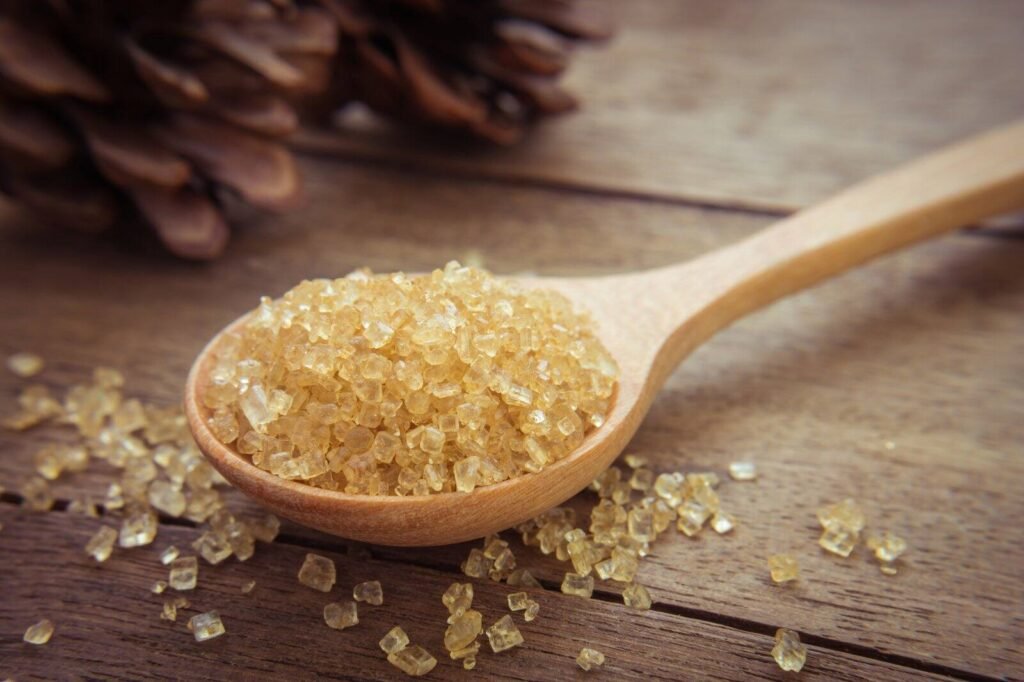
Table of Contents
What You’re Actually Buying When You Order Muscovado
Muscovado is cane sugar that keeps most of its molasses. The cane juice is boiled down and crystallized, and the molasses that a refinery would normally spin off is left in. That’s the whole difference, and it changes everything about how the sugar looks, tastes, behaves in a warehouse and costs to ship.
What arrives in the bag is soft, damp and sticky, a bit like wet sand. It’s dark brown, sometimes almost black. It smells of caramel and licorice and something slightly smoky. If you pinch it, it holds together. Ordinary white sugar pours. Muscovado doesn’t, and any muscovado sugar supplier sending you free-flowing sugar under that name is sending something else.
You’ll see it called unrefined sugar, raw sugar, Barbados sugar or moist sugar depending on the market. Technically it belongs to a wider family of non-centrifugal cane sugars, which also covers products like panela and jaggery. What matters to you as a buyer is simpler: when you ask a muscovado sugar supplier for “muscovado”, you should get sugar with its own molasses still in it, not white sugar that’s been sprayed brown.
Our Muscovado Sugar Specifications
Here is the spec we quote against as a muscovado sugar supplier. Every lot is tested for moisture and molasses content before it’s packed, and you’ll get the numbers for your lot, not a brochure range. If you need a softer, everyday molasses sugar at a lower price, our guide to working with a brown sugar bulk supplier covers light and dark grades.
| Parameter | Specification |
|---|---|
| Product | Muscovado sugar, unrefined or minimally refined cane sugar |
| Grades | Light muscovado and dark muscovado |
| Color | Dark brown to near-black (light grade is a paler brown) |
| Molasses content | 5 to 10%, depending on grade |
| Moisture | 3 to 5% |
| Texture | Moist, sticky, fine to medium crystal |
| Packing | 500g and 1kg retail bags, 25kg bulk bags, 1,000kg jumbo bags |
| Shelf life | 12 months in sealed, dry storage |
| Origin | Thailand, cane-derived |
| Loading ports | Bangkok or Laem Chabang |
If your product needs a tighter moisture band or a specific color reading, say so when you ask for a quote. Some lots fit a narrow spec better than others, and we’d rather tell you that up front than have you find out at your factory. A muscovado sugar supplier who says every lot hits every number is either lucky or not testing.
You can see the product listing itself on our muscovado sugar for sale page.
Light Muscovado
Light muscovado is the one most bakeries start with. It still tastes of molasses, clearly, but it doesn’t take over. Cookies, flapjacks, muffins, coffee syrups, granola and anything where you want warmth without a bitter edge. If you’re replacing regular brown sugar in an existing recipe and don’t want customers to notice a big change, start here. Most first orders we get as a muscovado sugar supplier are for light.
Dark Muscovado
Dark muscovado is strong. There’s a bitterness under the sweetness, a bit like treacle, and it’s meant to be there. Christmas cakes, sticky toffee pudding, barbecue sauce, marinades, rich chocolate products and some spirits and liqueur recipes. Buyers who order dark usually order it because nothing else gives them that flavor. If you’re unsure which one you need, ask your muscovado sugar supplier for both samples and bake with them. It takes an afternoon and saves you a container of the wrong thing.

How Our Muscovado Is Made, and Why a Buyer Should Care
Cane is crushed and the juice is cleaned and boiled down until it thickens. Instead of being sent through the centrifuges that a white-sugar refinery uses to strip out molasses, the thick syrup is cooled and stirred as it dries, so the crystals form with the molasses still around them. The result is coarser in character, less uniform and a lot more flavorful. It’s also why you can’t judge a muscovado sugar supplier on price alone.
That process explains three things you’ll notice as a buyer. First, two lots of muscovado will never be identical in the way two lots of refined white sugar can be. Color and flavor move a little with the cane and the cook. A decent muscovado sugar supplier will tell you that instead of promising a perfect match every time. Second, moisture is higher, so storage and packing matter more. Third, the minerals that come with the molasses stay in, which is part of why health-food brands like it.
The history of muscovado goes back centuries, long before modern refineries. For most of that time it wasn’t a specialty product at all. It was just sugar. Refining made white sugar cheap and normal, and muscovado slowly turned into the thing chefs and bakers ask for by name. Today a muscovado sugar supplier is selling something much closer to the old way of making sugar than almost anything else on a supermarket shelf.
Muscovado vs Brown Sugar vs Demerara
We get asked this every week, usually by someone who has been sent “muscovado” by another muscovado sugar supplier and isn’t sure it’s real. The quickest way to explain it is a table.
| Muscovado | Commercial brown sugar | Demerara | |
|---|---|---|---|
| How it’s made | Molasses kept in during crystallization | Usually refined white sugar with molasses added back | Lightly processed, molasses mostly spun off |
| Texture | Damp, sticky, clumps | Soft, slightly damp | Large, dry, crunchy crystals |
| Color | Dark brown to near-black | Light to dark brown | Golden amber |
| Flavor | Strong molasses, toffee, slight bitterness | Mild caramel | Light caramel, crunchy finish |
| Typical use | Rich baking, sauces, marinades, specialty retail | Everyday baking, food manufacturing | Coffee, crumble toppings, decoration |
One simple test: dissolve a spoonful of each in a glass of water. Real muscovado gives you a cloudy, dark brown liquid. Colored white sugar often clears quickly and leaves a thin brown film. It isn’t a lab test, but it catches the worst substitutions. Try it on the first sample from any new muscovado sugar supplier.
We sell all three, so we don’t have a reason to push you toward one. If your recipe needs crunch, our demerara sugar is the better fit, and there’s a full guide to checking a demerara sugar supplier too. If you just need a cheaper everyday sweetener, our brown sugar will do the job at a lower price. If you need the real molasses flavor, muscovado is the only one that delivers.
Who Buys Muscovado From Us
Our customers as a muscovado sugar supplier fall into a few groups, and each one cares about something different.
- Bakeries and cake makers. They care about flavor consistency and how the sugar creams with butter. Most of them buy 25kg bags from their muscovado sugar supplier.
- Sauce, marinade and condiment producers. They want dark muscovado, a stable color from batch to batch, and big volumes in 25kg or jumbo bags.
- Coffee shops, roasters and syrup makers. Light muscovado mostly, and they care a lot about taste.
- Chocolate and confectionery makers. Dark muscovado for depth, sometimes blended with other sugars.
- Health-food and organic-style brands. They sell the “unrefined” story, and they usually want retail packs under their own label.
- Importers and distributors. They buy by the container and resell to all of the above.
If you’re a distributor, it’s worth asking your own customers which grade they use before you order a full container of one. We’ve seen importers bring in only dark muscovado and then realize half their bakery clients wanted light. A good muscovado sugar supplier will let you split one container between both grades, and we do.
Using Muscovado in Production: Notes From Our Buyers
We’re a muscovado sugar supplier, not a bakery, but after a few years of shipping this product we’ve picked up what our customers tell us, and it’s worth passing on before you change a recipe.
- Swap by weight, not by cup. Most bakers replace brown sugar with muscovado one for one by weight. Because it’s damp and packs down, measuring by volume gives you inconsistent results.
- Expect softer, chewier bakes. The extra moisture keeps cookies and cakes soft for longer. Some bakers cut a little liquid from the recipe to balance it.
- Break up lumps before mixing. A quick sieve or a few seconds in a mixer saves you streaks of dark sugar in the finished product.
- It dissolves well in hot liquids. Sauce and syrup makers like dark muscovado because it melts into the batch easily and colors it at the same time, so they can often drop caramel coloring.
- Color carries through. Dark muscovado will darken anything it goes into. Great in a chocolate cake, less great in a pale sponge.
If you’re a manufacturer running trials, order samples of both grades and run them side by side in your actual product. Tasting the sugar on its own tells you less than you’d think. We’re happy to send enough for a proper trial batch.
Packing Options and What Fits in a Container
As a muscovado sugar supplier, we pack four ways:
- 500g and 1kg retail bags for specialty shops and supermarkets. We can print your own brand.
- 25kg bags with an inner liner. This is the standard size for bakeries and food factories.
- 1,000kg jumbo bags for large manufacturers who tip straight into their own systems.
- Mixed loads, for example 25kg bags plus a few pallets of retail packs in the same container.
A 20-foot container usually takes around 20 to 25 tons of muscovado, depending on bag size and whether you want it palletized. Retail packs take more space per ton, so a container of 1kg bags carries less sugar than a container of 25kg bags. If you’re building a mixed order, tell us the split and we’ll work out the loading plan.
For private label, budget extra time for artwork approval and printing on your first order. After that, repeat orders run on the normal schedule, which is one reason brands like to stay with one muscovado sugar supplier once the artwork is done.
Moisture: Where Muscovado Goes Wrong
Here’s the honest part. Muscovado’s biggest weakness is the thing that makes it good. All that molasses holds water, and sugar that holds water can cake, sweat or go hard if it’s stored badly.
Most problems we hear about from buyers who used another muscovado sugar supplier come down to one of these:
- The bags had no proper inner liner, so the sugar picked up moisture at sea.
- The container sat in a hot port for weeks and the sugar sweated, then set into blocks.
- The warehouse at destination was damp, or the bags were stacked straight on a concrete floor.
- The buyer ordered six months of stock at once and the last pallets were past their best.
What we do about it as your muscovado sugar supplier: we test moisture before packing, use lined bags as standard, and pack close to the ship date rather than letting stock sit. What you can do: keep bags on pallets, off walls, out of direct sun, in a dry room, and order in amounts you’ll use within the shelf life. If a bag does harden a bit, the sugar isn’t spoiled. Bakeries usually break it up or warm it gently. But it’s far easier to avoid.
How to Check a Muscovado Sugar Supplier Before You Pay
Because muscovado sells at a premium, it attracts people who will sell you something cheaper under the same name. Before you send a deposit to any muscovado sugar supplier, including us, ask these:
- Is it real muscovado, made with its own molasses, or brown sugar with molasses added back?
- What are the molasses and moisture figures for the lot you’re quoting, in writing?
- Can I have a sample of that lot, not a “typical” sample?
- Light or dark, and can you send both so I can compare?
- What liner do your bags have?
- Who is the shipper on the Bill of Lading, and does that name match the contract and the bank account?
- Will you accept an independent inspection before loading?
A real muscovado sugar supplier answers all of those quickly. If someone gets vague on the molasses content or won’t send a lot sample, walk away.
What Moves the Price of Muscovado
We don’t publish a fixed price, because it changes with the cane season and freight, and a number on a web page goes stale in a week. Ask us and we’ll quote you that day. Any muscovado sugar supplier giving you a fixed price for six months ahead is guessing. These are the things that move it:
- Grade. Dark and light are priced differently.
- Packing. Retail packs cost more per ton than 25kg bags. Jumbo bags are usually the cheapest per ton.
- Volume. A full container is cheaper per ton than a trial lot. Regular contracts are cheaper again.
- Season. Prices shift with the cane crop and the crushing season.
- Freight. FOB and CIF prices can be very different, and ocean freight changes month to month.
Compared with refined white sugar, muscovado always costs more per ton. You’re paying for a slower process and a smaller market. Compared with some imported specialty brands, buying direct from a bulk muscovado sugar supplier usually saves a lot, which is why distributors and manufacturers come to us.
Documents and HS Code
As your muscovado sugar supplier, we send these with every shipment:
- Commercial invoice and packing list
- Bill of Lading
- Certificate of Origin
- Certificate of Analysis for the lot
- Health, halal or other certificates on request, depending on your country
Muscovado is usually classified under HS heading 1701, most often as non-centrifugal cane sugar or as other raw cane sugar depending on how it was processed. Your customs broker should confirm the exact code for your country before the container ships, since the duty can differ between them. For the full document list for sugar imports, see our guide to bulk sugar import documentation.

Shipping, Lead Times and Payment
As a muscovado sugar supplier based in Thailand, we load from Bangkok or Laem Chabang. Once your deposit clears, loading normally happens within 10 to 20 days, a bit longer on a first private-label order. Transit depends on where you are: about a week to most of Asia, and roughly three to six weeks to the Middle East, Africa, Europe and the Americas.
We quote FOB or CIF. If you already have a freight forwarder, FOB is usually cheaper. If you’d rather have one delivered-to-port price, take CIF. The ICC Incoterms rules explain exactly where cost and risk pass from us to you under each one.
First orders are normally paid by T/T, 30% deposit and the balance against shipping documents. Repeat buyers on larger contracts can move to a Letter of Credit. You’ll find more on routes and timing on our shipping page and in our guide to bulk container shipping from Thailand.
Why Buy From Us as Your Muscovado Sugar Supplier
We aren’t the only muscovado sugar supplier in Asia, and we won’t pretend to be. Here’s what we can promise:
- Lot-specific moisture and molasses numbers, in writing, before you pay.
- Samples of both grades, so you choose by taste, not by description.
- Lined bags as standard and packing close to the ship date.
- Mixed containers with our other sugars, like coconut sugar, white sugar or powdered sugar, so a smaller buyer can still fill a container.
- Private label retail packs if you’re building your own brand.
- One team handling the sugar, the paperwork and the booking.
If you want to see the rest of our sugar range first, our Thai sugar supplier guide covers every grade we ship, and the sugar for sale page lists them all. If you’re comparing unrefined sugars, the coconut sugar supplier guide is worth a read as well.
How to Order Muscovado From Us
- Send us your grade (light, dark or both), quantity, packing size and destination port.
- We send a quote, FOB or CIF, usually the same or next working day.
- We send samples from the actual lot. You test them.
- We agree the contract: spec, packing, port, Incoterm and payment.
- You pay the deposit and we schedule packing and loading.
- We send the documents, you pay the balance, and the sugar is on its way.
The quickest way to start is our contact page. Tell us what you’re making with it, and we’ll tell you honestly which grade we’d use.
Frequently Asked Questions
What is the minimum order for muscovado?
Our standard minimum is one 20-foot container. For specialty food brands that want to test a product first, we can usually arrange a smaller trial lot or add muscovado to a mixed container with other sugars.
Can you send samples before I order?
Yes. We send samples of light and dark muscovado from the lot we’d ship, so you can bake or cook with them before you commit.
How long does muscovado keep?
About 12 months in sealed bags kept somewhere dry and cool. It doesn’t really go off, but it can harden if it dries out or cake if it gets damp, so storage matters more than the date on the bag.
Can you pack muscovado under my brand?
Yes. We pack 500g and 1kg retail bags with your artwork. The first run takes a little longer because the artwork has to be approved and printed.
How do I know a muscovado sugar supplier is selling real muscovado?
Ask for the molasses and moisture figures for the lot, get a sample, and do the water test described above. Real muscovado is damp, sticky and dissolves into a cloudy dark liquid. Any muscovado sugar supplier who won’t share lot figures or samples isn’t one you should be buying from.
Do you ship muscovado worldwide?
Yes. We ship to buyers across Asia, the Middle East, Africa, Europe, the Americas and Oceania, and quote FOB or CIF to your port.
Muscovado isn’t a complicated product, but it is an unforgiving one if it’s packed or stored badly. Buy it from a muscovado sugar supplier who tests every lot, packs it properly and tells you the truth about moisture, and it’ll give you a flavor nothing else can. If that sounds like what you need, send us your order details and we’ll get a quote back to you.