Finding a genuine Thai white glutinous rice supplier is harder than it should be, because a lot of listings that show up under “sticky rice” are actually short-grain rice being sold under the wrong name. If you’ve ever ordered sticky rice for a restaurant menu or an Asian grocery shelf and had a customer tell you it didn’t cook up right, there’s a decent chance that’s exactly what happened, someone upstream substituted a cheaper grain that’s sticky-ish but not the real thing.
We’re DThai Company Limited, and we mill genuine glutinous rice from paddy grown near Chiang Rai, Thailand. This guide covers what a real Thai white glutinous rice supplier should be able to prove to you, the specs worth pinning down, and how to avoid ending up with a substitute grain sold under the sticky rice name.
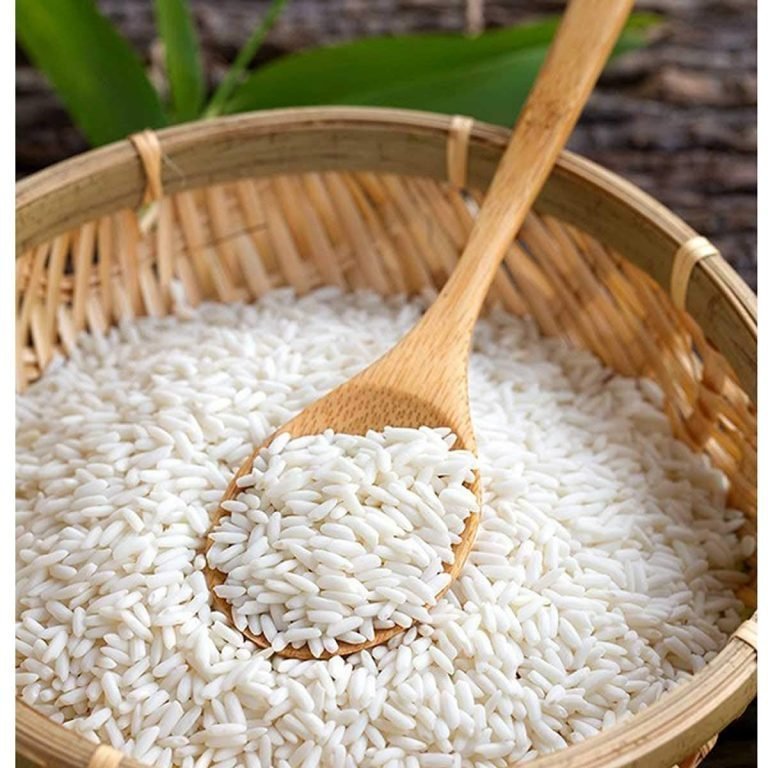
Table of Contents
- Why “Genuine” Matters More Here Than With Most Rice
- Specifications Worth Getting in Writing
- How Genuine Sticky Rice Is Actually Grown and Milled
- Cultural Context Worth Understanding as a Buyer
- Grading Standards, and What’s Different Here
- Packaging, Container Loading, and MOQ
- Who Buys This, and Why It Shapes What You Should Ask For
- Traditional Preparation, Worth Passing to Your Customers
- Common Mistakes Buyers Make
- Questions to Ask a Thai White Glutinous Rice Supplier Before You Commit
- Quality Control and Traceability
- Payment Terms and Documentation
- Freight and Container Planning
- How This Compares to Other Rice in a Typical Catalog
- Storage and Shelf Life Once It Reaches You
- A Quick Checklist Before You Commit to a Supplier
- Sustainability and Farming Practices
- Institutional and Retail Buyers Have Different Priorities
- Nutritional Profile, Roughly
- What to Expect on Price Compared With Standard White Rice
- Import Documentation and Labeling for Gluten-Free Claims
- Frequently Asked Questions
- Getting a Quote
- Related Rice Sourcing Guides
Why “Genuine” Matters More Here Than With Most Rice
Glutinous rice, despite the name, contains no gluten at all. “Glutinous” refers to its glue-like stickiness once cooked, which comes from being almost pure amylopectin starch, unlike jasmine or long-grain rice, which carry a meaningful percentage of amylose. That starch structure is exactly what makes real sticky rice clump together so completely, ideal for eating by hand, shaping into a ball, or soaking up coconut milk in a dessert like mango sticky rice.
A short-grain rice variety can look similar in the bag and even cook up somewhat sticky, but it won’t hit the same near-total cohesion, and it won’t behave the same way in a traditional steamed preparation. A serious Thai white glutinous rice supplier should be able to confirm the actual variety, not just describe the rice as “sticky,” and should welcome a kitchen test before you commit to volume.
Specifications Worth Getting in Writing
- Variety: glutinous (sticky) paddy rice, long-grain type, is the genuine export variety.
- Moisture: 14% max.
- Broken grains: 5% max.
- Admixture: 0.2% max.
- Milling: well-milled and sortex-cleaned, so discolored or damaged grains are pulled out.
- Shelf life: 12 to 18 months when stored dry and sealed.
- Packing: 1kg, 5kg, 25kg, and 50kg PP bags, with 1,000kg jumbo bags for larger buyers, and private label printing available.
- Loading: FCL preferred, LCL available for smaller trial orders.
Grain integrity and whiteness are worth asking about specifically with this product, beyond the standard broken and moisture numbers. Because glutinous rice is often the visual centerpiece of a dish rather than a background starch, discoloration or excessive broken grain shows up much more clearly than it would in a rice you’re serving under a sauce.
How Genuine Sticky Rice Is Actually Grown and Milled
We source paddy from the same growing region as our other lines and run it through multiple hulling and milling passes with close attention to grain integrity, since glutinous rice needs to hold together as a whole grain through milling and packing rather than breaking down, which affects both cooking performance and how it looks in a finished dish. Sortex sorting pulls out discolored or damaged grains to keep the finished product visually consistent, which matters more here than on our commodity long-grain lines.
Cultural Context Worth Understanding as a Buyer
Sticky rice isn’t a specialty item in Laos and parts of northern and northeastern Thailand, it’s the everyday staple grain, eaten by hand with nearly every meal rather than reserved for dessert. That’s a genuine distinction from how it’s mostly known internationally, through dishes like mango sticky rice, and it’s worth understanding if you’re marketing this product to a customer base that may only know it as a dessert ingredient. A Thai white glutinous rice supplier who understands this cultural context usually understands the product better across the board, grain integrity, cooking method, and end use all connect back to how the rice is actually eaten in its region of origin.
Grading Standards, and What’s Different Here
The same core terminology applies as across commodity rice: broken percentage, admixture, and moisture content, measured against standard export thresholds. What’s specific to glutinous rice is grain integrity and whiteness as additional grading factors, since visible discoloration or excessive broken grain matters more in a dish where the rice itself is the visual centerpiece rather than a background element. If a Thai white glutinous rice supplier quotes a price well below what everyone else is quoting, ask directly about grain integrity tolerance before assuming you found a genuine bargain rather than a lower grade being sold at a discount.
Packaging, Container Loading, and MOQ
Minimum order for most exporters, us included, is one 20ft container FOB Thailand, holding roughly 24 to 27 tonnes depending on bag size and stacking pattern, though most orders for this specific line run smaller than our high-volume commodity rice given more specific foodservice demand. LCL is generally available for smaller trial quantities, useful for new restaurant accounts or Asian grocers testing a product line before committing to a full container. Mixed pallet loading is common too, if you’re combining glutinous rice with another line from the same catalog, which suits buyers running a varied Asian ingredient range rather than a single SKU.
On packaging, 1kg and 5kg bags suit retail and Asian grocery shelf placement, 25kg and 50kg bags cover foodservice distributors, and 1,000kg jumbo bags work for larger volume buyers. Custom bag printing is available on most orders, and because customers with gluten sensitivities sometimes ask questions, a good supplier should help with clear, accurate labeling language around the naturally gluten-free status of the product.
Who Buys This, and Why It Shapes What You Should Ask For
This line moves heavily through Asian grocers, Thai and Lao restaurants specifically, and foodservice distributors supplying them, along with broader Southeast Asian restaurant groups building out a mango sticky rice or savory sticky rice menu item. Demand for a dependable Thai white glutinous rice supplier tends to track the growth of Thai and Southeast Asian dining internationally, restaurant groups expanding into new markets, and Asian grocers stocking genuine sticky rice next to their other staples rather than a generic substitute.
Restaurant groups typically order against a very specific menu item and care most about grain integrity and consistent stickiness batch to batch, since an inconsistent delivery shows up immediately in a finished dish. Asian grocers stocking it for retail resale care more about clear labeling explaining the naturally gluten-free status and correct cooking method, since general shoppers may not know how to prepare true sticky rice correctly. Tell your supplier which category you’re buying for, it changes what grade and packaging actually make sense.
Traditional Preparation, Worth Passing to Your Customers
Genuine sticky rice is traditionally soaked for several hours or overnight, then steamed, not boiled, in a bamboo basket over simmering water rather than submerged the way other rice is cooked. This method matters for achieving the correct texture, and anyone advising customers or writing recipe copy should flag that boiling this rice like standard white rice produces a mushy, incorrect result instead of the intended chewy stickiness. For mango sticky rice specifically, the cooked rice is typically mixed with warm coconut milk, sugar, and a pinch of salt while still hot, then rested before serving alongside fresh mango.
Common Mistakes Buyers Make
The most common mistake is assuming any short or round grain rice will work as a substitute, it won’t. True glutinous rice has a fundamentally different starch composition that ordinary short-grain rice can’t replicate, no matter how sticky it looks in the bag. The second is not accounting for the steaming rather than boiling cooking method when advising customers, which leads to complaints about texture that actually trace back to incorrect preparation rather than a bad batch of rice. The third is confusing the “glutinous” name with gluten content, understandably, since the word looks like it should mean something it doesn’t. Customers with gluten sensitivities often need direct reassurance that the product is naturally gluten-free.
Questions to Ask a Thai White Glutinous Rice Supplier Before You Commit
Can I get a sample large enough to run an actual kitchen test, not just look at the grain? Is this genuine long-grain glutinous rice, or a substitute short-grain variety being sold as sticky rice? What’s your grain-integrity tolerance for broken or discolored grains? And who’s actually milling this, is it you, or are you reselling someone else’s output? A real Thai white glutinous rice supplier answers all four directly, and it’s worth asking the same of anyone else you’re comparing.
Quality Control and Traceability
Every batch we export traces back to the specific mill lot it came from, with records of moisture readings, broken grain percentage, and grain integrity for that shipment. Given how much whiteness and grain integrity matter for presentation in traditional dishes, our sorting checks run tighter here than on our general commodity lines. Ask your own supplier whether they can produce lot-specific data for your order, or whether you’re getting a generic average that looks the same for every buyer regardless of what actually shipped.
Payment Terms and Documentation
Standard terms are T/T, roughly 30% deposit with the balance against shipping documents, moving to L/C for larger repeat orders. Every legitimate shipment should include a certificate of origin, phytosanitary certificate, and fumigation certificate, with third-party inspection available if you’d rather verify independently before the container ships. Once a deposit clears, loading and shipping typically takes 10 to 18 days, with transit time after that depending on your destination port.
Freight and Container Planning
A standard 20ft container holds roughly 24 to 27 tonnes of bagged rice, though most orders for this specialty line run smaller given the more specific demand compared with commodity long-grain rice. Mixed pallet loading works well if you’re combining glutinous rice with another product from the same catalog, common for buyers running a varied Asian ingredient range. Flag any destination-specific fumigation or labeling requirements before booking so nothing holds up customs clearance once the container arrives.
How This Compares to Other Rice in a Typical Catalog
Compared with our Short-Grain Rice, genuine glutinous rice is noticeably stickier, short-grain rice is stickier than long or medium grain rice but nowhere near the near-total cohesion of true glutinous rice. Compared with our Jasmine Rice, the two aren’t really substitutes for each other at all, jasmine is aromatic and separate while genuine sticky rice is neutral in flavor and fully cohesive. Buyers sourcing a Thai white glutinous rice supplier are almost always working with a specific traditional recipe or dessert application that genuinely requires this exact starch structure, not a general-purpose rice for a broad menu.
Storage and Shelf Life Once It Reaches You
Glutinous rice holds up reasonably well in storage compared with brown or red rice, since it’s fully milled like white rice, but it’s still worth keeping cool, dry, and sealed once the original bag is opened. At 12 to 18 months shelf life when stored properly, it’s a manageable product to hold in moderate volume, though restaurant accounts ordering against a specific, steady menu item generally do better keeping stock fresh and turning over rather than holding a large reserve.
If you’re repackaging into smaller retail units for an Asian grocery shelf, keep grain integrity in mind, excessive handling during repackaging can increase the broken percentage in a way that shows up as lower-quality product on shelf even though nothing changed about the original batch.
A Quick Checklist Before You Commit to a Supplier
Before wiring a deposit to any Thai white glutinous rice supplier, pull together a written spec sheet confirming the actual variety, not just the word “sticky”; a sample you’ve cooked using the traditional steaming method, not boiled; confirmation of crop year and milling date; an independent lab certificate or the offer of third-party inspection; clear payment terms in writing; and a realistic lead time tied to your destination port. None of this is an unusual request, and a supplier confident in their own product will walk you through all of it without pushback.
It’s also worth asking directly how the supplier tests for genuine stickiness before it ships. A visual check alone doesn’t confirm starch composition, and a supplier who runs an actual cook test as part of their quality process is telling you something meaningful about how seriously they take the difference between real glutinous rice and a substitute variety.
Sustainability and Farming Practices
The paddies behind this line are the same smallholder, largely rain-fed operations supplying our other rice, without a heavy synthetic pesticide program. Batch sizes for glutinous rice run smaller than our commodity long-grain line given the more specific demand, which naturally keeps stock fresher and turning over rather than aging in storage. If your retail partner or restaurant group needs formal documentation on farming practices, tell your supplier the exact standard being asked for rather than accepting a vague sustainability claim on a product page.
Institutional and Retail Buyers Have Different Priorities
Restaurant groups and foodservice distributors ordering against a specific menu program care most about consistent stickiness and grain integrity, since a batch that underperforms shows up immediately once it’s on a plate. Asian grocers and specialty retailers stocking a Thai white glutinous rice supplier’s product for shelf resale care more about clear labeling, correct cooking instructions, and consistent packaging, since general shoppers may not be familiar with the traditional steaming preparation. Telling your supplier which category you fall into changes what grade, packaging, and even bag size actually make sense for your order.
Nutritional Profile, Roughly
Per 100g cooked, glutinous rice runs close to 170 calories, slightly higher than standard white rice due to its denser cooked texture, with about 38g of carbohydrate and roughly 3.5g of protein. Despite the name, it’s naturally gluten-free, the term refers entirely to starch stickiness, not to the gluten protein found in wheat, which is worth clarifying clearly on any customer-facing label or menu description.
What to Expect on Price Compared With Standard White Rice
A genuine Thai white glutinous rice supplier will usually quote this line somewhat higher than plain long-grain or jasmine rice, driven by tighter grain-integrity sorting and the smaller batch sizes the product typically runs on. That premium reflects real handling, not just demand-based pricing, since a batch with excessive broken grain or discoloration is genuinely less usable in the traditional dishes this rice is bought for. If a quote comes in noticeably below what several other suppliers are offering, it’s worth asking directly what grain-integrity tolerance that price is actually built around.
Import Documentation and Labeling for Gluten-Free Claims
If you’re planning to market this product with a gluten-free claim in your destination market, check your local labeling requirements before printing packaging. In many regions, a “gluten-free” claim on a food label carries specific legal thresholds and sometimes requires testing documentation beyond a supplier’s word that the grain contains no wheat. A genuine Thai white glutinous rice supplier can confirm the product is naturally free of wheat gluten as a botanical fact, but it’s worth checking with your own regulatory advisor on what documentation your specific market requires before you print a formal claim on retail packaging.
Beyond the gluten-free question, standard import documentation applies the same way as our other rice lines: certificate of origin, phytosanitary certificate, and fumigation certificate as a baseline, with third-party inspection available if your import process requires independent verification rather than relying on supplier-issued paperwork alone.
Frequently Asked Questions
Is glutinous rice the same as sticky rice?
Yes, two names for the same product. Glutinous rice is the more technical or botanical term, sticky rice is the common name used in most Southeast Asian restaurants and markets.
Does glutinous rice contain gluten?
No, despite the name. It’s naturally gluten-free, the term refers to its glue-like stickiness from amylopectin starch, not to wheat gluten protein.
What’s the minimum order for a Thai white glutinous rice supplier like DThai?
One 20ft container FOB Thailand for full pricing, with smaller trial quantities available for new foodservice accounts testing the product first.
Do you ship glutinous rice worldwide?
Yes, mostly to Asian grocers, Thai and Lao restaurants, and foodservice distributors across multiple regions.
Can I get samples before committing to a full container?
Yes, we can send a pre-shipment sample along with a certificate of analysis before you commit to volume, and we’d encourage running an actual cook test rather than judging the grain by sight alone.
How can I tell if a Thai white glutinous rice supplier is selling the genuine variety?
Ask them to confirm the specific variety by name, not just describe the rice as “sticky,” and request a sample large enough to steam and taste yourself. Genuine glutinous rice clumps into a near-solid mass when steamed correctly, a substitute grain won’t fully replicate that texture no matter how it’s cooked.
Can you do custom or private label packaging?
Yes. We handle bag printing and custom packaging specs for buyers who want their own brand on the bag, across 1kg retail units up through 50kg foodservice sacks.
Getting a Quote
If you’ve already narrowed down what you need, send us your target volume, destination port, and packaging preference, and we’ll turn a quote around within a business day. You can see our full spec sheet on our Glutinous Rice product page, or reach out through our contact page directly. For more background on the variety and its regional significance, the Wikipedia entry on glutinous rice covers the botanical and cultural detail in more depth than we can here.